Anyone who chooses cinema as a first date should be slapped with a wet fish.

Todays blog : Cleo Connolly explains the success, and the pitfalls of online dating.

There’s a certain skepticism about online dating. Myself and some friends are quite skilled at the whole business. One interesting observation I’ve made is the differences of opinion between gay and straight people. Gay people are more open to it – and often better at it.

Most women imagine all the guys are potential serial murderers, like this lovely fella:

As for what men apparently expect from women on dating sites, well, there have been some interesting social experiments on that.

For many, “online dating” equals “Grindr”. However, just as internet equals more than angry hysterical Tweeters and YouTube comments, online dating is rather varied. And definitely not restricted to gays, or nerds in their mothers’ basements severely lacking social skills. The reason we’re more open to it is simple: more options to meet people. Forget what the Notebook told you, love: your chances of tripping over Mr Right are pretty slim, and we fish from a much smaller pond than you.

We mostly meet potential romances organically in real life. I’ve had two significant relationships, both met through friends. Nevertheless, some of my best dates came from the interwebs. All perfectly lovely, with healthy and I’m sure medically verifiable levels of sanity. One was a speech & language therapist, with whom I shared a passion for Sebastian Faulks. We saw each other for several months. It ended because she was slightly older and was in the frame of mind for settling down, probably with children. The footloose and fancy free twenty four year old me just wasn’t down with that, so we parted ways. Another was a biomedical engineer of some description. She moved to some God forsaken place like Cavan. Possibly Carlow. So, that was that. I still keep regular contact with a girl that I dated in London four years ago, and we catch up whenever I’m there.

Mind you, we’ve had some hilarious disasters. I had the foreign woman who got angry that I wasn’t agreeing to meet her just yet, so I ended up enduring weeks of passive aggressive (and frankly, a bit weird) messages. R. went on a date with a chap who insisted on giving a palm reading, and proceeded to give the most cringeworthy gushing appraisal of him. R. is my gay male mirror image, so imagine how well that New Age claptrap went down. First Place for Most Hilarious Online Dating Fail is tied between an acquaintance who fell for a Nigerian scammer posing as a charity worker in Africa (no, really. She did), or my good friend D’s Titanic dating experience.

“His what?”

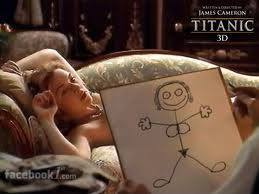
D’s gentleman friend was an artist, and asked could he draw him. You’re probably imagining something like this:

Pretty much. Apart from being a disastrous match anyway, poor D. woke up post coital to find Picasso sitting at the end of the bed, sketching him in all his glory.

“I honestly thought I was dreaming, but no – I woke up and saw the picture after…”

I don’t think any of our adventures top that, to be honest.

Dating is a bit like shopping. It’s lovely wandering into town, leisurely browsing around, seeing what takes our fancy. However, most of us have that “life” thing insisting on taking up most of our time. So when looking for something nowadays, we’ll often go online. That doesn’t mean we never set foot on the high street again. It’s convenient. Yes there are dangers, but honestly? If you’re the kind of person who’ll meet someone after only a handful of messages which all come back to “NE pics” or “got cam”, you’re probably likely to give your number to a less-than-stellar specimen in the pub. Think of it as buying something from an Ebay seller in Hong Kong with about four ratings, all of them red. You should be spending your time online looking up an introductory course to common sense.

Filtering. Gays can remove straight people from searches – and themselves from theirs. Location, religion, kids, pets, you name it. You’ve got kids, or you’re the kind of person who screams at the sight of a little person? You probably don’t want to meet the other. Are you a health nut who thinks smokers should be shot on sight, or a 60-a-day diehard seeking similar? Filter those cretins out of your way! All of this saves awkward first date conversations over dinner/drinks/coffee (anyone who chooses cinema as a first date should be slapped with a wet fish):

“Yes, I’ve a son/daughter/hamster called Johnny/Annalise/Fluffilufficus and they’re my world! I…what’s that? Oh, you have to go, ok. Yes, you text me so.”

While people can hide themselves online, they can also show a lot. It’s also a good way for people who find it difficult to meet others to connect. Singles/divorced/widows, parents or otherwise can find people in similar circumstances. It’s hugely popular with religious people. Jewish singles, Christian singles, Muslim singles, anything.

If you’re the type who can meet your soulmate bumping into them on the street, more power to you. If not, consider your options. You may be pleasantly surprised.

Tagged with: , , , , ,
Posted in Uncategorized

Gang Bang, Ulster Style – The “Romper Room” Murder. (Jeanne Griffin)

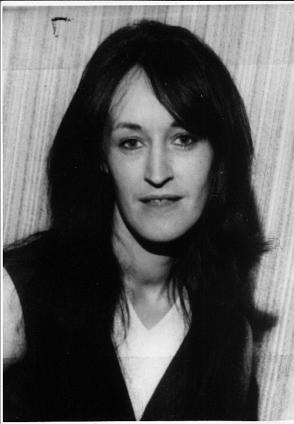
Of all of the deaths in the so called “troubles”, the following has haunted me since I read the details.  This is Anne Ogilby, a beautiful 31 year old, single mother of four.

Image

She’s dead now.  Beaten to death.  By women. Over and over and over, with her six year old daughter in earshot.  The image of Anne Ogilbys final moments, and the fact that she met her brutal death at the hands of other women is likely why it is indelibly marked in my mind, unrestful and uneasy.  Her youngest child was just 8 weeks old.  We are grateful to host todays blog writer Jeanne Griffin, who describes below the circumstances involved in the murder of Anne.  Before we get to her post, the following poem, written by Linda Carson, is both haunting and beautiful at the same time.  She captures wonderfully an image of many women in Belfast at that time, dead eyes, trapped and suffocating in the area in which they lived, and in a cycle of violence, and prisons, and hopelessness.  And the waste and revulsion and anguish at Anne Ogilby’s demise, and the way in which her murder was carried out.  But she does much more than that.  She also captures the other side of some women in Northern Ireland who involved themselves in paramilitary groups – callous, wreckless, and de-senstised to the point where they could murder in cold blood.  It’s an important description, and one which is not often explored when looking at women’s role during the conflict.  Ed.

Gang Bang Ulster Style

Broken Belfast Street.
Grey and Dingy.
Sealed off with barbed wire
To stop murderous neighbours
You lived in that trap
Suffocating.
He was in another prison
Called Long Kesh.

Sleepwalking woman.
You shuttlecocked
From jail to jail
On dutiful visits.
Your eyes were old
They did not match
That bright hair
That made men watch you
Avidly:

You met him –
Another starved somnambulist.
Two living corpses clung together.
Thawed each other for a while.
But they found out.
They dragged you to their playroom.
Now you lie limp.
Face down.
Dumped in a ditch.
Routine policemen come
Accustomed, stoney-faced
‘Turn her over, see the damage’.

O, poor adventuress –
In the name of virtue,
They cut your flaxen hair.
Defiled your lovely breasts.
Before degutting you.

Linda Anderson , published Spare Rib, 1989.

 The Murder of Anne Ogibly  (Jeanne Griffin)

On 29 July 1974, the body of a young dark-haired woman was accidentally discovered in a ditch in Belfast’s Stockman’s Lane near the MI motorway by maintenance men.  The RUC were immediately called to the scene where they examined and photographed the dead woman who had been lying on her back partly submerged in 18 inches of stagnant water. Her bruised and blackened face was visible and her arms outstretched as if in mute supplication.

A CID team headed by Detective Alan Simpson quickly identified the dead woman as 31-year-old Anne Ogilby. As the details of her death emerged, it caused widespread shock and revulsion throughout Northern Ireland, despite people having become accustomed to daily bombings and shootings.  Anne Ogilby had been beaten to death by two teenaged girls from the Sandy Row women’s UDA unit. Her “crime” had been to have an affair with a married UDA man and make disparaging remarks about his wife not sending him food parcels after he’d been interned in the Maze.

Anne Ogilby, a Protestant originally from Sion Mills, County Tyrone, had transferred to south Belfast in 1968 where she took up a transient lifestyle. She was the single mother of a daughter, Sharleen, born after an affair with a married British soldier who had abandoned her and the child. By the time she was introduced to William Young in August 1972, she had also given birth to two more children by different fathers but the boys had been put up for adoption after their birth.

She fell deeply in love with Young, a married UDA member.  He claimed however that his marriage had broken up and was waiting for the divorce to come through.  He often brought her to a UDA club that had been set up in a disused bakery in Sandy Row’s Hunter Street, until he was interned in 1973. She enjoyed the company of the club’s patrons and the camaraderie of fellow loyalists against the IRA.  Young’s wife was a member of the Sandy Row women’s UDA unit; led by Elizabeth “Lily” Douglas, a fearsome woman  who revered power above else in life and who had a criminal record dating back over ten years. Lily’s 19-year old daughter, Elizabeth was also a member of the unit.

When Young told Anne during a visit that his wife was not sending him food parcels although the Loyalist Prisoner’s Association had provided her with the money, Anne made the mistake of repeating this within earshot of the UDA women. They were already antagonistic towards her due to her affair with Young and they also resented her for daring to frequent pubs and clubs on her own which they regarded as a cultural infraction that brought shame upon their community.  Young’s wife was also able to prove she had been sending the food parcels. On 23 July 1974 , eight weeks after Anne gave birth to a baby, Derek –  fathered by Young, she was taken into “custody” by Lily and several others from her unit and tried in a kangaroo court, held at the disused bakery –  which also served as a UDA ‘Romper Room.’ A total of eight women and two men presided over her “trial” and she was informed that if found guilty she’d be “rompered”. Anne was grilled over her affair with Young and calumnious remark sabout the food parcels. At the end of the interrogation, the men ordered her release.

The UDA women however wanted blood. As soon as Anne boarded a bus at Glengall Street they dragged her off into a waiting car for a further grilling. The driver had already notified the RUC and within minutes Anne and the eight UDA women were taken to RUC Queen Street station for questioning. She was, however,  too frightened to reveal why they had forced her into a car. Anne and the others were released and she returned to the YWCA hostel where she lived at the time with her six-year old daughter on  the Malone Road. The following day Lily told her Heavy Squad girls (the women who meted out beatings) that Anne was a troublemaker who had to die. The women quickly made plans to facilitate her murder.

The women had knowledge that Anne and Sharleen had an appointment with the Social Services office in Shaftesbury Square and both she and her daughter were kidnapped and bundled into a van driven by UDA man Albert Bumper Graham. They were both taken to the UDA club inside the old bakery which was already prepared  to serve its other grisly purpose as a Romper Room. Sharleen was given money  to buy sweets and Anne was dragged upstairs by the waiting UDA women. Two members of Lily’s ‘Heavy Squad’, teenagers Henrietta Cowan (aged 17) and Christine Smith (aged 16) forced Anne onto a bench and placed a hood over her head. The girls then proceeded to punch her in the face, the blows knocking her to the ground . She was subsequently kicked in the  face, head and stomach, and beaten with sticks . When Cowan and Smith began dropping bricks onto Anne’s head , Albert Graham and Josephine Brown (another Heavy Squad girl) realised that things had gone too far and remonstrated with the girls to discontinue the attack. Cowan and Smith did pause briefly to smoke cigarettes.

Six year old Sharleen had returned from the shops and was banging on the outside door crying for her mummy. Although Anne had by this stage sustained severe head injuries, Sharleen heard her screaming and pleading for mercy. Her pleas were futile as Cowan and Smith clearly enjoyed their roles as Lily Douglas’s enforcers and Cowan resumed beating Anne with renewed vigour with a brick until she lay dead on the floor.

According to the later autopsy report, Anne received a total of 24 blows to the head and body with a blunt object, 14 of which caused a severe fracture to the bulk of the skull.

Their work done, Cowan and Smith recounted to details of the murder to Lily over drinks and while the latter arranged for the disposal of Anne’s body, Cowan and Smith got ready to go to a disco.

Henrietta Cowan and Christine Smith served 8 years of a life sentence for carrying out the murder and Lily Douglas served just four years of a 10 year prison sentence.  All of the people involved were convicted of the role in which they played in Ann Oglby’s murder.

honestdigest@outlook.com

Tagged with: , , , , ,
Posted in Uncategorized

Exclusive : Was Martin McGuinness the head of the IRA’s Northern Command?

Image

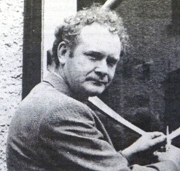
A note written inside Long Kesh  from one IRA Commander to another,  dates Martin McGuinness’ departure from the Northern Command of the organisation to 1995, at a time when he was also Sinn Féin’s chief negotiator.

While it has been publicly stated before, Mr McGuinness, giving evidence to the Bloody Sunday Inquiry , admitted his role in the Derry Unit of the IRA, but stated that  he left the organisation in 1974.   This is in contrast to the stance taken by the Sinn Féin President Gerry Adams, who, despite claims to the contrary, has always consistently denied being a member of the IRA.

The man, who once declared to the Special Criminal Court in Dublin ‘I am a member of Óglaigh na hÉireann and very, very proud of it’, now talks of peace rather than petrol bombs, and is the Deputy First Minister in the Northern Ireland Executive.

The journey from the Bogside to Stormont on the outskirts of Belfast has been a fascinating one.  Often described as the more direct member of Sinn Fein, Martin Mc Guinness has seen off allegations of knowledge of the Claudy bombings and the murder of Frank Hegarty, to become statesmanlike, even running for the Irish Presidency in 2011.

In his documentary, Age of Terror, journalist Peter Taylor alleges that McGuinness was the head of the IRA’s Northern Command and had advance knowledge of the IRA’s 1987 Enniskillen bombing, which left 11 civilians dead.

Journalist Ed Moloney has also previously written about Mc Guinness role in Northern Command, claiming he left the position in the nineties, at a time when Sinn Féin were becoming heavily involved in peace talks with the British Government.

However, Brian Arthurs writing at his time of imprisonment to a senior republican in Tyrone on 18th August 1995, not only states that he has heard Mc Guinness (who he refers to as Mc G) has stepped down from his role – but that his replacement was the now deceased IRA man, Brian Keenan.  In this grammatically challenged note, Arthurs, (who was named by The Sunday Times in 2005 as an Army Council Member – after his release from prison); writing to “Tommy”, also speaks of Sinn Féin’s link with the IRA, and the possibility of separation of the two in order to pursue the political agenda further.

  COMRADE TOMMY I AGREE FULLY ABOUT YOUR THINKING ON THE
SO CALL PEACE PROCESS. AS THE LEADERSHIP ARE TELLING
PEOPLE THAT WANT TO HEAR THAT WE’ER GOING BACK TO WAR
‘THAT WE ARE’ AND A DIFFERENT STORY FOR THE POLITICAL
HEADS. THERE IS DEFINITELY GOING TO BE NO MOVEMENT THIS
YEAR WITH CLINTON COMING IN DESEMBER AND YES I HEARD
THAT THERE WAS GOING TO BE A CONVENTION BEFORE THE END
OFF THE YEAR AS THEIR THINKING OF CHANGING SOMETHING IN
THE CONSTATUTION!! I DON’T REALLY KNOW THAT IT IS YET
BUT IT MIGHT BE TAKEN OUR SEATS IN STORMENT? I ALSO
  HEARD THAT Mc G!! HAD STOOD DOWN FROM O.C OF NOTHERN
  COMMAND AND THAT BRIAN K! HAD TAKEN OVER FROM HIM. SO
THAT WOULD LEAVE ME OF THE THINKING THAT THE SINNERS
ARE GOING TO TRY AND SEPERATE THEMSELEVES FROM THE ARMY
IF THE WAR EVER STATED UP AGAIN. THE ONE BIG QUESTION
THAT I THINK THE LEADERSHIP WILL BE ASKED BY THE END OF
THE YEAR IS HAS’THAT BEEEN ACHIEVED B.A

Mc Guinness has repeatedly rejected allegations that he was the head of Northern Command, yet many people don’t give his denials credence.  This contemporaneous note, written by a former leading provisional republican, from inside Long Kesh Prison, will surely cast doubt on his denials further.

honestdigest@outlook.com

Tagged with: , , , , , ,
Posted in Uncategorized

Note from IRA man raises questions on Loughgall.

                        arthurs  Brian Arthurs.

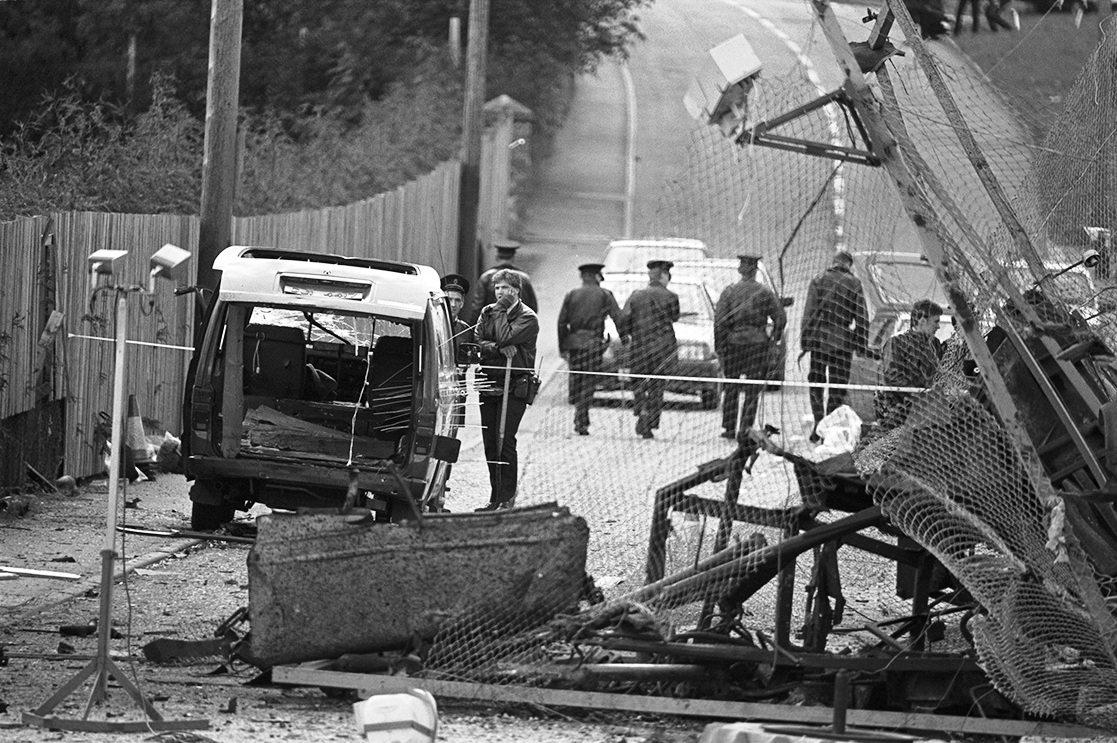
A typed note from one former IRA commander to another may shed light on a mystery surrounding the killing of eight IRA men and one civilian, shot by the SAS in 1987, in what subsequently became known as “The Loughgall Ambush”. 

“VWC” has seen the document in question, which is part of a wider archive of material smuggled out of the H Blocks in the late 1990’s.

 Dated 6th May 1995, just weeks before an inquest into the killings took place, the note contains the following revelations;

  • A suggestion that men convicted of IRA offences conspired between them to offer false evidence at the inquest, if called to the witness stand.
  • Corroboration of the theory that at least one IRA man escaped during the shoot-out.
  • For the first time, further information regarding the alleged discovery of an informant.

Writing to “Badger”, believed to be a high ranking IRA man in Tyrone at the time, Brian Arthurs, once a former top Provisional – now at odds with the current Sinn Fein strategy, and whose brother Declan was killed at Loughgall;  begins,

 “I was over in H5 today and I’d a brilliant conversation with R****!!  We were discussing the Loughgall inquest and here are a few points that I want yourself and ……. (solicitor) to discuss of legal reason (sic), as myself and R**** are thinking of taking the box”

 (It should be noted that there is no suggestion that the solicitor mentioned was involved or indeed had knowledge of any actions, and we have therefore decided to omit his name.  We have also omitted the name of the other IRA prisoner and alleged witness to Loughall)

Note the “person already boxed off” line next…

 “R****;. will be stating that he was returning from work in Armagh (person already boxed off)…will state that he drove into the middle of the ambush…seen the SAS men standing over the lads and firing rapidly into their bodies.”

 Arthurs continues

“If yourself and ______(solicitor) aren’t happy with this line, then R****’s story could be highlighted through a friendly journalist as the RA man who got away!”

Arthurs, who was in America at the time of the shootings, and who returned home after learning of his brother’s death, was subsequently arrested with John Corr in 1989, when the car he was travelling in was intercepted by the RUC in Ardboe.  A woman, Collette O’Neill was found cowering in the back seat under a coat.  The RUC charged the two men with kidnap, and according to Mark Urban in his book, Big Boys Rules ; O Neill was taken into protective custody, but later returned after allegedly striking a deal with the IRA.  The Crown case against O’Neill’s alleged abductors’ collapsed in December 1989, one month after she returned to Tyrone.  Was O’Neill the Loughgall informer?  And if so, what was the deal which guaranteed she didn’t meet the fate of others who had passed information to the RUC?  In Ed Moloney’s Book, A Secret History of the IRA , he writes that in an interview with him, O’Neill denied being the Loughgall informer, yet admitted that the call for the IRA operation to go ahead had been made from her house.

Speculation had been rife that there was indeed one informer or more who passed information to the RUC regarding the planned attack by the IRA on the town barrack’s, which ultimately led to their deaths.   If O’Neill did pass on any information, was she saved to protect a bigger informer in the ranks of the IRA?

Having studied the next part of Arthurs comm, it appears that Arthurs is stating that O’Neill had admitted her role in warning the RUC of the attack, prior to it taking place.  Arthurs talks of her being given a guarantee that no one would be hurt.  He also mentions a “taped confession”.  Was this part of the deal that was struck?  If O’Neill did pass on information, she would have proved useful to the IRA, as they were intent in proving prior knowledge which led to a “shoot to kill” SAS operation.  Was part of the deal that she would be expected to explain her role in events publicly, if she was called upon?

 “As for myself, if Collette O’Neill isn’t willing to help or tell her side of the story.  I’m prepared to give evidence that O’Neill made contact with myself because I was a well known republican in the East Tyrone area, and that my brother was killed at Loughgall (and because I was arrested with her!!)  I’ll also state that O’Neill made a full “taped” confession to myself ,(and hand it over to the court, if it’s still about?) as she couldn’t live with herself after what had happened  Because the Special Branch told her no one would get hurt etc etc.  I’ll state that we were heading to a press conference in Belfast to highlight the use of informers!! when we were stopped by the RUC…’

(The full truth around Loughgall will probably never be exposed, however this note, written by someone who had more knowledge than most into events at that time, is of historical value.  We have decided that it is in the public interest to explore the questions that it will most likely raise for the reader.  Most sources believe that the security services had prior knowledge of the IRA attack weeks before nine men were shot dead by the SAS at Loughgall, which would suggest that Colette O’Neill could not have been the Loughgall informer, although she may have passed on some information – but the question that still needs to be fully answered is – just how did the SAS come to learn of the impending IRA attack?)

lgall

Posted in Politics

Former IRA women complain of pornography, but where do they stand on abuse revelations?

In today’s blog, Catherine Mc Cartney explores a communique on Pornography written by female IRA prisoners in the mid nineties, chastising their male counterparts in the Republican Movement.

‘The ultimate form of domination, next to murder, is rape.’

Very few would disagree with the above sentiment eloquently articulated by the authors of a ‘communique,’ smuggled from Maghaberry prison, which can be accessed below.  The writers put pen to paper in response to what they believe to be a serious failing on the part of their fellow comrades. The tone, language and coherency indicate that much thought and discussion had been spent on the subject matter. The communique does not give the background to the dressing down of their comrades however it is clear that the women had become aware of behaviour which seriously displeased them. This compelled them to question not only the actions of their comrades in arms, but the status of women in the eyes of those very comrades. The subject matter is pornography and the communique lays out the misogynistic nature of the practice and rationally explains the connection between it and sexual violence against women.  The consequences of the acceptance of the objectification of women and children as subjects to be enjoyed are highlighted i.e. sexual violence.

From the tone it is clear that the communique is part of an ongoing conversation within the republican community relating to this matter. The women are unequivocal regarding the connection between pornography and sexual violence against women and strongly rebut the claim that it is harmless or the link unproven, this suggests that the men have been defending their behaviour. The men’s defences are dismissed, ‘it is not enough to reject ‘hard core porn’ and reject child pornography while using it at all,’….

‘to do this is to use feeble excuses to try and distance oneself from the abuse of women’.

Importantly they declare,

‘Pornography offends us as women who have fought against oppression. Members of the Republican community should not be participating in further abuse’.

The men are not appealed to or pleaded with but commanded,

‘You men must examine your actions and ask if you want to be part of a revolutionary process’.

Pornography is anti-revolutionary and anti-women and abusers must not take part in the ‘process’. The authors slap down any attempt to minimise excuse or justify the actions of the abusers, simply put the abuse of women and children is anti-revolutionary therefore it follows that perpetrators cannot be part of the revolution. The women are clear; there is no place in the movement for abusers. It can be assumed that sexual violence against women and children by members of republican community also falls into this category. There is no doubt if the women had been aware of this, it would have elicited an equally if not more robust condemnation and call for action.

So, what became of the writers of the communique and what has changed over the past decade and a half? The communique was written in the 1990s and portrays fiery, feisty and convicted women who are clear in their understanding of what the ‘revolutionary process’ is about. It’s about equality, empowerment, progression, protection of children and it’s about freedom from oppression. There are no signatories on the ‘communique’ therefore we cannot be sure what happened to these women.  The women who proclaimed, ‘as a woman this offends me’ and who demanded ‘You men must examine your behaviour and actions…’ and powerfully,

’It is hypocrisy to oppose the violence of strip searching while indulging in pornography’

may be dead, may have left the party or may remain in elected positions currently within Sinn Fein.

Sinn Fein now administer  the rule of the regime that stripped searched the women at Maghaberry and  stands accused of covering up rape and other sexual crimes against women and children by republicans. The dismissive treatment of victims who have come forward to tell their stories of abuse and further traumatisation by internal investigations echoes the ‘hypocrisy’ referred to in the communique.  This hypocrisy was clearly demonstrated at the Ard Fheis in February where Gerry Adams was treated to a standing ovation and rapturous applause before he even uttered a word of his speech. The same party faithful’s response to those who dare suggest that a leader who stands accused, in the public court, of covering up child abuse,  and who may not be the best person to head up a progressive and modern party.  It is not beyond possibility that some of the women, who drew up the communique from a prison cell in Maghaberry all those years ago, sat at the top table as the house was brought down with this rapturous applause.  If so, they have joined in the applause for a man who admitted that he believed his brother had raped his four year old neice –  yet allowed him to  continue to participate in the ‘revolutionary process’.

The irony is that these women now articulate the ‘feeble excuses’ of the perpetrators rather than the honesty expressed by the women in the cells,  

‘If you don’t care say so, don’t make excuses’

As a woman this offends me!

Porn

Tagged with: , , , , , , , , ,
Posted in Politics

West Belfast – It’s Criminal to repeat the myth that it’s ‘everyone else’s fault but ours.’

This blog examines some of the problems associated with West Belfast, the IRA’s role, and the resultant legacy that comes with deflection of responsibility.

 Jobs for the boys and girls

In the early days in West Belfast, it was a necessity to set up innovative Community Groups.  In the absence of adequate internal funding, or state investment, people had to find alternative ways of empowering communities in order to change their lives for the better.  Projects like the co-ops, Springhill Community House, the knitting factories, all served to both bring in much needed resources, at a time when the community was straining, and to create community cohesion.  For the most part, these centres were run for the people, by the people, and they did provide positive access to areas such as education etc.

However, with the influx of funding, the IRA quickly saw an opportunity.  The republican movement knew it needed the support of the people.  So, from the 80’s onwards, it developed a strategy where it would slowly take over the Community Sector in West Belfast, therefore ensuring both control and support in equal measures.  So, it set up residents groups, it swamped AGM’S in order to ensure its people were voted into strategic positions, and it shut down dissent while all the time building its own community base.  Money was an added bonus.  Much needed funding was diverted off to IRA coffers in some instances, ensuring that the real people within the community, who most needed the services, often did not benefit from them.

In one case, a community centre on the outskirts of West Belfast was found, after investigation to have “misappropriated funds”, and the funders subsequently withdrew support, ensuring that one particular area was left with skeleton community facilities.  Other Government schemes, such as ACE, were manipulated and fraud was committed, and as long as timesheets were all signed off in certain places, no one was any the wiser.  And if they were, they weren’t saying anything.

The process of employing people in some centres was also a revelation.  Job Descriptions were drawn up with certain people in mind, questions in some instances were selectively given out before interview, in one case, a community centre in West Belfast was legally challenged after going through the interview process.  It later transpired that a less qualified candidate had been selected for a post that they had been assured they would get.  The excuse?  Job scores had been “added up wrongly.”

People were strategically placed into jobs in many instances, not on the basis of experience or merit, but simply because they were deemed to be “on message”.  One influential republican smiled at me when I raised this practice over dinner one night.  “There’s a difference between headhunting someone and boxing someone off”, she said.  I failed to see the difference.

1998 was a watershed moment in West Belfast’s Community job allocation.  Scores of prisoners were released under the GFA.  Some of them were lucky enough to walk into well paid jobs.  Some republicans used those well paid jobs to draw a wage, and simultaneously use thosepositions to further their republican activities.  One republican ex prisoner spent their time employed on a respectable wage as a Community Development Worker, yet the time spent on the job was not on Community Development, but on attending meetings on a regular basis for the republican movement.

“The Community” was never developed to its full potential, and problems within West Belfast have become worse, yet there is one particular political movement who have benefited greatly from the amount of hours and personnel spent on furthering its aims – many of which came at a cost to the public purse.

Other community workers do sterling work, and I don’t wish to tar all with the one brush, but a cursory glance at some personnel in some centres would tell you who is running the show in any area.  The hypocrisy of republicans to call for more investment in these areas, and to complain about under resourcing, when many of resources already allocated have been syphoned away from the people who need it most, is staggering.

In short, in many instances, people bent and broke the law.  Not for the cause of Irish Freedom, which is an argument for another day, but because it benefitted individuals, and a collective of individuals – and they used the cover of “republicanism” to do so.  From every angle.  And then they complained to anyone who would listen about why they needed more resources to tackle lawlessness on the streets.

 Crime

So, let’s look at crime in West Belfast.  Lawlessness abounds.  It has the highest overall crime rate, and highest level of violent crime including burglary, theft, criminal damage, and anti-social behaviour per head of population than any other constituency in Northern Ireland.  Of course, republicans would have us believe that this is largely due to a lack of policing in the area over the years.  And they’d be right.  But, who made it a “no-go” area for policing?  Who told their constituency not to deal with the police?  Here’s a quote from Gerry Adams, then MP for the area in 1996.  “The RUC are completely unacceptable”.  Gerry, of course is not responsible on his own for West Belfast’s crime rate.  But, he must shoulder some responsibility for the message that he sent, and which others parroted, which meant that members from within his own community were effectively denied the normal route of justice that people living in policed communities have.  He also bears, or should bear a responsibility as someone who was serving MP in the area for many years.

In the late 90’s, the republican community started discussions to pilot a new project around alternative ways of justice.  Community Restorative Justice was born.  It was not entirely acceptable to the community who were target groups at that time, largely due to some of the personnel who were behind it.  In some instances, the very same people who had administered “civil administration” in areas, were the people who the community was expected to deal with.  Criminals talking to criminals to tell them to stop their criminal behaviour.  You really couldn’t make this stuff up.

Of course, people in a large number of cases were badly treated by the RUC.  This writer would not deny that for a second.  It happened.  However, republicans must take responsibility for their part   – a large part – in ensuring that ghetto like areas – with skewed views on crime and law and order became so out of control that the legacy of lawlessness will thrive for generations to come.  Republicans created their own genie that exploded out of the lamp, and no matter how hard they try now, is proving next to impossible to disappear.  The only puffs of smoke to be seen, are the burnt out wreckages of cars in places like Divis, where, children as young as seven can be seen taking their turn at doing doughnuts in the grounds of St Peters.

Armed robbery, racketeering, assaults, rape  – all swept under the carpet for years in pursuit of an idealised romanticised agenda, which served no purpose except to further send out the most irresponsible message to younger generations as they came through.  And, the cycle continues.  Policing in part does exist now, but West Belfast has a long way to go to reduce the most serious of crime statistics – and sustain a reduction for any length of time.

According to NINUS, 2010, West Belfast has the lowest life expectancy rate, and the second highest rate of death and suicide.  It also has the highest birth rate, and the highest disability rate.  It has the highest proportion of post primary pupils with special needs statements.  The highest number claiming unemployment benefits.  82.7%of this population are Catholic.  While the same problems undoubtedly affect Loyalist Areas, this writer is focusing on West Belfast – most of which was under the control of republican paramilitaries.

Contributing factors are obvious.  The high levels of drink and drugs available.  West Belfast is awash with bars and bookies and off licences and GP Surgeries.  During and after the conflict, many people were prescribed ether anti-depressants or valium.  Weary people, sick of living on their nerves.  Existing, rather than living is probably a more accurate description.  Post Traumatic Stress Disorder statistics are through the roof as a result of the conflict.  Death is glorified in most housing estates, where you can see wall murals or memorial gardens commemorating dead IRA volunteers.  Fighting for Ireland was and is seen by many as noble and brave, martyrs eulogised and turned into heroes.  Status, power and control are big factors to life in West Belfast.  Is it any wonder groups of young people band together creating mayhem and destruction to those around them in pursuit of a feeling of status amongst their peers; when they see generations gone before them attain it by joining their own illegal band of brothers and sisters?

A web of so called community cohesion was spun, and while the IRA’s public message was very much the “fighting for Ireland mantra”, the reality was very different in West Belfast.  The IRA neglected the very people they publicly said they were trying to protect and defend.

There can be no form of control greater than that exerted internally over communities.  Those who complained about being oppressed ultimately became the oppressor, and those who were discriminated against masterfully practiced the art of discrimination.  And ordinary people suffered as a result.  Good people.  People who deserve better.  People who were vilified collectively, labelled “savages” and “animals”, people who were, and who were not republican minded, all paying a heavy price now for the neglect which their community suffered while the IRA furthered its own aims.

Both the British and Irish Governments rightfully should be held to account for their responsibilities during the conflict.  Likewise, Loyalist Paramilitaries up to their necks in criminality must shoulder their share of the blame for the fear in which they instilled throughout the community while they murdered with impunity, in many cases aided and abetted by those in positions of power.

But in this constituency – in West Belfast, Gerry Adams’ own back yard, the IRA should be held responsible for their deflection of responsibility – while blaming everyone else for its ills.

I’m guilty of it too.   I used to blame the Brits for things also, while conveniently staying silent on matters closer to home.  People do it all the time.  “Dead Irishmen and Women?”  It’s the Brits fault.  “No employment prospects” Those pesky Brits are at it again.  “Not enough sugar in the morning coffee?”  Damn those Brits!

That type of thinking will only get you so far.  It’s clearly ridiculous, and at some point people will individually and collectively have to take responsibility and stop blaming everybody else.  Chose to join the IRA?  That’s a choice you made.  Exploit workers on a building site? That’s your movements fault.  Carve up a system of housing so that “yours” are looked after first and pocket the proceeds from dole drops?  Armed robbery?  Siphoning off community funds?  That’s a choice you made and it’s your fault.  Not only is it inherently wrong, but it’s criminal.  And it’s criminal to keep repeating the mantra that it’s everybody else’s fault but yours.  Because while that myth is continually peddled, there are people living in areas like Ross Street, or Whitecliff Parade, or Colin, Ait na Mona and other areas who are still suffering from the consequences.

Tagged with: , , , , ,
Posted in Uncategorized

Valentine’s? Boke inducing rubbish! (Áine Carson)

In tonight’s blog, Belfast based freelance journalist Áine Carson gives us a taste of just what Valentine’s Day means to her.

ROSES are red

violets are blue

you’re an aul bastard

                                        and I hate you!Image

TODAY’S the day, commercialism tells us we should be waking up with hearts in our eyes and a burning desire for our partner. Our lovers should be up at dawn making breakfast and sprinkling rose petals around the house.

The partner is always male for some reason. Why is Valentine’s day rarely targeted towards lesbian couples for example- are they exempt from romance?

 It’s all boke inducing rubbish and the sooner it ends, the better.

Women who receive flower deliveries to the office are more to be pitied than envied. Nothing screams out “I’m insecure” more than wanting colleagues to know you’re going out with someone.

Similarly, nothing says “bunny boiler” more than sending your boyfriend a massive card to his work. What you are really saying is “he’s mine, hands off or else!”.

If this is your first Valentine’s day without a card on the fireplace, it can be a depressing ten minutes. But ask yourself – are you happier now without him or her doing your box in?

For others, it will be the first time they’ve had a card – that they didn’t post to themselves. They’ll be walking on air. Feeling spoiled as they gobble up chocolates while admiring their flowers, displayed on the windowsill for the neighbours to see.

Some couples are surprising though – they go for the whole wined, dined and romantically entwined carry on even if they’re short on cash or together for yonks.

Having worked in the hospitality trade for years, I can let you into a secret.   It’s inadvisable to book a table for Valentine’s. Your dinner will be precooked that day. You’d be better off with a pot noodle.

My chum is going out for a romantic all you can eat buffet. Clearly she and her partner are not planning on getting their rock and roll when they get home. I was at the same place last week and farted for two hours afterwards. It was not attractive.

You see I’m an expert in affairs in the heart, mainly because I’ve had more boyfriends than Taylor Swift. But I learned to love myself first, then allow someone else in.

To me, the epitome of masculinity is a man who works hard and provides for his family. A man that makes you feel safe, one you can come to with your troubles –  knowing he’ll help find a solution.

There’s nothing more attractive than a man who can work a washing machine, make a good dinner or gets the hoover out occasionally. One that changes dirty nappies and helps with night feeds is a keeper.

Likewise, a woman who pulls her weight and appreciates a good man is important. There are a lot of lazy hallions out there, taking their men for granted. Then they wonder where it all went wrong when he’s nowhere to be found.

Showing affection and sharing the chores is an everyday thing – not just the middle of February.  Valentines?  Do the housework instead, you’ll at least have something to show for it!

Tagged with: , , , , ,
Posted in Uncategorized

Do you dunk your Penis?

sticker,375x360.u1As every mother knows, parenting can bring with it many challenges.  It’s extremely enjoyable, and there is nothing like the feeling when your little one is full of fun and frolics, even when your house is upside down after the latest “play session”.  But, at times, you won’t have all the answers.

Im a google mum.  And a texter.  Being able to reach someone to seek reassurance on whether a sniffle is just the beginning of a cold, from other mothers who have been there and done that, for example, is a godsend.

So is Mumsnet.   When my daughter was very young, it was a great way of picking up tips and tricks from other parents.  During pregnancy, it was full of useful information on everything from employment rights while expecting, to what to expect at different stages of your baby’s development.  I used it frequently, and mostly checked out the same topics, expanding my knowledge along the way.

Imagine my surprise, then, when I stumbled across a topic quite unlike any other I’ve seen on the Mumsnet site.  Or, anywhere.  Ever.  The topic in question was “Penis Beakers”.  Yes, you read right, and I’ll say it again for effect.  Beakers for Penises.  You can find it here

I couldn’t believe my eyes.  A poster to the thread, clearly had a burning question that she needed answers to.  On the internet.  With the whole world watching.  She simply wondered whether it was a regular occurrence for couples to keep a glass by the bedside table for, er, dunking the man’s penis.  As you do.  Obviously.

The post went viral almost instantaneously, so much so, that the influx of viewers, (almost 600,000 of them) crashed the servers of the Mumsnet site.  There was a deluge of answers to her question too, though admittedly maybe not quite what she was looking for.  Sara Crewe and her penis beaker became an internet sensation.  They even made The Guardian and the Telegraph.  I bet that was some conversation over dinner with Mr Crewe.  “I’ve something to tell you sweetheart… I’ve made your penis famous!”…

Most replies to the topic were hilarious, as people the length and breadth of the country got in on the ,em, act, and began to open up to what they did or didn’t do behind closed doors.

I’m no prude, but even I was stunned at how graphic some of the disclosures were.  They were also side-splittingly funny.  I found myself laughing out loud, unable to tear my eyes away, except to share the link with other female friends so I could enjoy it with them too.

There is a school of thought that says as a society these days, we are not really interested in what others do in the bedroom.  “Penis Beaker” knocked that theory into oblivion.  The thought of a couple dunking their post coital member in a glass on the bedside table sent people’s curiosity through the roof.  Personally, it required a stiff drink while reading.  Excuse the pun, it was too good to leave out. 

Not content with staying on top of their own bedroom activities, hundreds of people decided to engage in what quickly seemed like a worldwide debate.  Most rejected it outright.  Others added their own routines for good measure.  It snowballed.  People are now actually selling their “recyclable penis beakers” on EBay.  The nation became obsessed.

My favourite question in the comments section of the site was “Has there ever been a midnight mix up with a glass of drinking water?”  I was almost afraid to look at the answer.  What penis beaker also did, though, was exactly what people do everywhere.  We bond, through either laughing at, or sharing our own experiences, or others experiences of sex.  The only difference was that this was much bigger bonding.  On a national scale.

Penis Beaker allowed us to giggle from the safety of our own bedrooms.  But it also gave us a glimpse into the lives of other people.  We’re nosy like that.  We do like to read about what others get up to, even if we’re laughing at them. Admittedly, maybe not in as much detail, but nevertheless, we read, and pass it on, and silently thank Christ the woman admitting to the post sex clean up isn’t us.

Bonding is good. How else do we learn from each other?  Good sex is something to be celebrated, tips swopped and discussed, just like any other topic. My advice to Sara Crewe and her partner is to do what you like with your beaker, as long as you both enjoy a happy and healthy sex life.  I’d also like to thank her for opening up a national debate and giving me the best laugh I’ve had all year.  Some of the comments were witty in the extreme, all of them contributing in their own way to normalising sex discussion in a frank and joyous way.  It was refreshing.

Though, if anyone else has a green beaker, they’re never admitting to it now.  However, if the idea has tickled your fancy, I’ve found another site selling them.  With instructions….

Tagged with: , ,
Posted in Fun

Constitutional Question is Holding us Back. (Lyra McKee)

In tonight’s blog, Freelance Investigative Journalist Lyra McKee gives us an insight into her life growing up in North Belfast, her thoughts on the recent SDLP row regarding Justin Cartright and the constitutional debate – and her hopes for the future.

Growing up on an interface during a conflict – even one that’s fading – means your childhood was not normal. North Belfast was a difficult place to be during the 90s. Knowing where to go and where not to go was a matter of life and death. At 8 years old, I knew that venturing too far down Manor Street was a risk; one of the surviving Shankill Butchers was rumoured to live there. Three streets up was Rosapenna St, where loyalists would drive down from a nearby road that connected the Oldpark to the Shankill. I was banned from going there after my Mum saw a young father murdered.

I lived with the same fears as the other kids. We knew there were certain adults in the street we were to never talk back to. If our football landed in their garden, we ran.

I remember one individual, in particular, who frightened children and adults alike. We were warned to not upset him because “people who argue with him go missing.”

As I’m typing this, I wonder if my mind has invented it all. I know it hasn’t. I’m 24 next month. In 16 years, Northern Ireland has come so far. The contrast between 2014 and 1998 is so stark that the old days don’t feel real.

Yet not everyone has moved on. There was uproar this week over an Australian SDLP candidate, Justin Cartwright, who described himself as an “economic Unionist.” in an interview. The Irish News was the first to swoop in for the kill followed by he of Landrover surfing fame, Gerry Kelly, whose only comment was that Justin was clearly not an Irish Nationalist.

The argument, as it went on Twitter, was that the SDLP is a party whose main goal is a united Ireland. Sadly, Kelly and the SDLP – who made it clear to the Irish News that Justin had been reprimanded – didn’t seem to realise that they were the ones missing the point.

As I said, I’m nearly 24. I’m from a mixed religion family but was baptised Catholic and grew up in a Republican area. I’m the kind of voter Sinn Fein might target. Yet I won’t vote for them or for the SDLP. While they bicker with Unionists and worry about a United Ireland, I’m worried about paying this month’s bills. Work is hard to come by. The cost of education – at undergrad and Masters level – is so high that the door has practically been closed on working-class young people. If it wasn’t for one regular part-time gig, I wouldn’t be able to put myself through university. I’ve had to adjust to a world in which there is no job security. Meanwhile, the politicians who supposedly represent me are arguing about a constitutional issue I have absolutely no interest in.

The Good Friday Agreement has created a new generation of young people, freed from the cultural constraints and prejudices of the one before. It used to be that being a Unionist or Nationalist was an accident of birth. You didn’t decide whether you were for the Union or not; the decision was made for you. Your friends were drawn from your own kind.

Looking at my own social circle, it’s clear how times have changed. One of my oldest friends is a DUP voting Orangeman who marches every 12th of July. Another friend is a former loyalist paramilitary who has tried to make a new life for himself. Another is a former Provisional IRA member who has done the same. Rounding this motley group off is my friend Declan (not his real name), a policeman from a staunchly Republican family.

Just 15 years ago, it would have been unthinkable for someone like me to have such an eclectic friendship group. It would have been unthinkable for someone like Declan to join the police. Whilst our politicians debate issues connected to the past, we have moved on.

So I welcomed Justin’s comments. For me, that he considered himself an “economic Unionist” wasn’t significant. What was significant was his willingness to campaign on issues that are actually affecting our society. It was an acknowledgement of what most voters are thinking: the constitutional debate is irrelevant. It doesn’t pay the bills. It doesn’t get new laws passed. It doesn’t improve life in Northern Ireland in any tangible way.

Whilst I saw the tail-end of the conflict, I didn’t see enough to make me bitter towards “the other side”. I saw enough that peace and moving forward seemed like the only options. Most children of the GFA generation – those born after 1998 or who were relatively young when the Agreement was signed – saw no conflict at all. Slowly, a common consensus is emerging, the belief that the Union vs a United Ireland argument should be left to die. It’s holding us back. It reminds us of days past.

I don’t want a United Ireland or a stronger Union. I just want a better life.

Tagged with: , , , , , , ,
Posted in Politics

Loyalty (Ann Travers)

Many people in Northern Ireland are driven by loyalty. Loyalty to the flag, loyalty to the Queen, loyalty to “The Cause”, loyalty to their political party and loyalty to their leadership.

For many families though the thing that drives them on is loyalty to their loved ones. The people nearest and dearest to them who were ripped away suddenly. The people who went out one day to run a message, go to work, bring the children to school, go to visit a friend, do some shopping, (the list goes on), and never came back. The people who’s lives were taken by a bomb purposefully planted, or who were injured, never to have the chance to have children, destroying relationships and making life difficult to cope with. These families are victims. It doesn’t matter who made them a victim but they have had to suffer a terrible loss.

Recently, through absolute loyalty and love for their lost loved ones, many more families are starting to speak out. Individuals who have never spoken before publicly, anxious to hold those responsible for their loved ones murder to account. To hear politicians and those responsible –  to acknowledge them –  and their pain, and tell them “your loved one was a good person, we had no right to take their life. There is no justification,no “what about”. We acknowledge it was all wrong and we would never do it again.”

Some may say this is wishful thinking on relatives part, especially when victims who have spoken out get such horrendous abuse on Social Media sites such as Twitter, or if they have summoned up the bravery to share their story on the radio, because of their immense love for their dead relative. Instances such as Castlederg, or senior politicians such as Gerry Kelly being careless and aggressive with language saying “If I had to I would do it all again”.  Does he really have no concept or compassion at how re traumatising and devastating his words are for some families? Neither does it help when UVF men are remembered during Orange Parades, the loud bang of the drums, the shrillness of the flutes all intimidating for those who lost loved ones because of their religion or “mistaken identity”.

However none of this will stop or should stop families holding politicians to account, and demanding accountability from those organisations who made them victims in the first place. It is necessary for those grieving families who suffered immediate impact to have healing, so their grief and hurt isn’t passed down through generations. It is necessary that we show the world not only are we able to live together but we embrace a morality that says murder is wrong, unjustifiable and doesn’t solve anything.

Victims must stand together, not abuse each other, respect each others loyalty to their loved one. It goes without saying for the vast majority of families that murder was wrong.

Lets leave the whataboutery behind.

Support each other no matter what differing political views.  That is democracy, it’s much better to embrace that than the armalite.

Tagged with: , , , , , , , ,
Posted in Politics