Ann Allan – Happy memories of East Belfast

We are delighted to welcome Ann Allan as our newest Vixen. Below is a piece detailing her memories of growing up in the 60’s and 70’s, and her fondness for East Belfast.

Image


I arrived in East Belfast in October 1966. I was 17 and apart from an exchange visit to France for a month I had never been away from home on my own. I came from Rostrevor, a small seaside town and I was used to all the comforts of home. I had left school and was lucky to get a job in the Civil Service as a Clerical Officer. Things weren’t going too well at home as I had fallen for a young Scottish protestant. This was not on for a young Irish Catholic girl in those days. It was many years later when tracing my family tree that I discovered that I was not actually native Irish and our ancestors in fact hailed from Somerset. Oh the irony! The local Parish Priest had been alerted that one of his flock was ‘walking out’ with a protestant and he was none too pleased. It was then that I decided to head for the big smoke, where I hoped the citizens of Belfast were more enlightened, but that was not the case. On my first morning in my new job my new boss remarked to her colleague that she had prided herself on an all protestant section until I came along. Tricks were played on me my other members of staff but I was tough or naive and so ignored it. 
Anyway, I arrived a bit bewildered at Bryson Street where there was a girls hostel called St Paul’s. I was met at the door by Sr Adriana a rather stern looking nun who proceeded to read out the rules. The charge was £2 per week. This was to include breakfast, evening meal and supper. Ten shillings extra if you stayed the weekend. Hot water was provided on a Monday night for two hours, otherwise the water was freezing. By the time we all tried to wash our hair, there was no hot water left. Anything left on the floor of the dorms was confiscated and 2d per item would be charged for its return. There were about 30 girls in the hostel and we slept in individual cubicles surrounded by a flimsy curtain, our only bit of privacy.
 I soon settled in and got to know my way round the area, Seaforde Street, Chemical Street and the Newtownards Road. A local chip shop on the Newtownards Rd helped to sustain us growing girls and a local shop at Chemical St or Susan St ( I can’t remember which) sold cheese from a large block. No Health and Safety in those days. Inglis had a bakery beside the Ropeworks and the pastries were delicious. As we passed the houses on our way to the hostel each evening the residents came out to say hello and everyone was friendly. On many occasions we went over to the Protestant church up the road and had a chat with the Minister.
 In those days a trolley bus ticket into town was 4d and it was possible to walk home in the early hours of the morning from The Orpheus, The Astor and the students union at Queens, crossing the Queens bridge without any hassle. Those were carefree years and we enjoyed them to the full. All the big groups came to Belfast and there was always a show to go to. I saw the Beach Boys, Gene Pitney, Neil Sedaka, Them, to mention a few. I saw the premiere of The Sound of Music in the Odeon while the Free Presbyterians demonstrated outside, because of the Catholic theme in the film .
 After a year a few us moved to a flat in the university area and my Scotish planter joined me up in Belfast. Within a short time the troubles started and the nights echoed to the sound of gunfire and bombs. The theatres closed and Belfast became a no go area for tourists. Many nights returning from home after the weekend, our bus was diverted through streets that had burning barricades and we travelled in fear of been hijacked.
 But I loved Belfast and I returned to East Belfast with Gordon and we have been together for almost 49 years. I was 16 when we met and married at 21. We weren’t allowed to marry in my home town and I have happy memories of being escorted up the Crumlin Road by two army jeeps. We planted some seeds of our own and our offspring grew up mixing with all religions and kept up the tradition set by their parents. East Belfast unfortunately gets bad press but it is a lovely place to live and I remember the 60’s with affection.
Tagged with: , , , ,
Posted in Uncategorized

Victims Blog : Ann Travers : Gerry Adams court case, memories and pensions.


Image

The last number of weeks have been tough one for victims in Northern Ireland.   If you have lost someone or part of your physical self in the “troubles”, or if you have been emotionally or mentally affected, then it can’t have been easy.   I can’t imagine what the Mc Conville family have been through, or how they have managed to deal with recent events, and I only hope they realise the very genuine and real support they have across the board.   Despite the usual whataboutery, not one lost life is more important than another.  Every time I hear about what a family has been through I feel a great sadness.   I know many more feel just like me, it doesn’t matter what “side of the fence” you come from, none of it should ever have happened.  But it did, and we need to find practical ways to help those who have suffered.


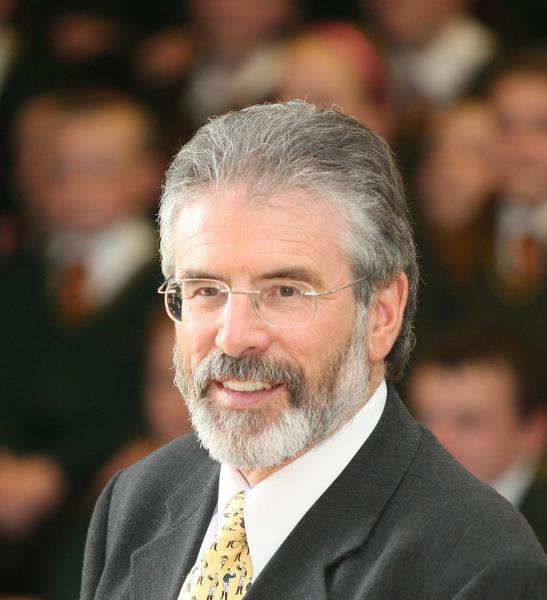
It can be quite hard for victims to hear news at times, because it can raise anxieties, bring back memories, trigger flashbacks, and invoke tears.  It was evident that Gerry Adams arrest in connection with the murder investigation into Jean Mc Conville cast up many different emotions, and triggered many views.  Some were thrilled, others devastated and indeed affronted that “their leader” could be questioned about a 42 year old murder of a widowed mother of ten children.  Indeed Gerry’s own thoughts were carried live on television after his release, where he denied any involvement in connection with the murder.


I had a different set of memories.  On the 14th March 1984,Gerry Adams was up on obstruction charges in front of my Dad, who worked as a resident magistrate.   The case was adjourned for lunch. Gerry Adams was shot by the UFF during the break, and he was injured in the shoulder and arm. ( Two Loyalist gunmen, John Gregg, 27, and Gerard Welsh, 34, were jailed for 18 years in March 1985 for the attempted murder of Mr Adams. A third man, getaway driver Colin Gray, 28, was sentenced to 12 years. )


Because of the shooting, the court case against Mr Adams was adjourned until the 12th April 1984, yet it never reached a conclusion.   Just four days before Gerry Adams’ court case was to be heard by my father again, on 8th April 1984, my Dad, Mum and sister were attacked by the IRA.  My father was seriously injured, and my sister murdered after gunmen opened fire at point blank range. 


Gerry Adams obstruction case was to be subsequently dismissed and never reheard.   The reason given for this was that evidence had been given in front of Dad –  and because he was off work sick after being shot, evidence wouldn’t be re heard by another magistrate. We have no way of knowing for sure if things would have been different had the case been heard.  I did discuss it with my father, but legalities prevent me at present from going into detail.  And we have no way of knowing for sure if my father would have come to the attention of the IRA had he not heard the obstruction case.  Most of his previous cases were hearing low level criminal charges.   So, Mr Adams arrest last week brought back memories of a different kind for me…..


On Thursday morning, I switched on the radio and listened to the headlines on Good Morning Ulster, that the Victims Commissioner Kathryn Stone was reported to have suggested pensions for those seriously injured during the conflict –  including terrorists.  The language here would do nothing for the widows or children sitting at home. Instead thoughts would be conjured up that once again those who had created widowed and orphaned victims were being equalled to them. All I could feel was immense sadness and fear. Sadness because over the past few years and during my time as a member of the victims forum I have had he immense pleasure of getting to know some of the nicest people I have ever met. Included in this group are people , whom I like to call friends, who have lost limbs and been left paralysed. They are immensely brave, determined and Christian . These individuals mostly live on state benefits because their ability to work was robbed from them when a terrorist planted a bomb or decided to attempt to steal their life by shooting them and leaving them paralysed. They are incredibly independent , as far as they can be, but as they get older their needs grow.


 I cannot and will not stand in the way for a pension for those who were severely injured. Yes, there may be terrorists who injured themselves who may get it, or as the victims commissioner suggested legislation may be brought in similar to the criminal compensations board , either way I don’t care. All I care about is that those severely injured victims who have fought so hard aren’t left feeling as disheartened as the McConville family were. As indeed so many of us are as the daily drip drip off retraumatising information comes through. Yes, I do believe there is a moral hierarchy of victims, however all have families, all suffer the same. Morally I can’t and won’t speak against the pension for seriously injured.


They have been through enough. They need our support. Another 10 years of arguing may only mean there are fewer to claim the pension. It won’t improve their quality of life, it won’t bring back their limbs, it won’t bring back our loved ones. I fear that because victims have been treated so badly, and don’t know who to trust, that our fellow “victims and survivors” may suffer, and they simply don’t have time to wait for us to sort out who is a victim. They need their pensions now.


Please politicians, please do something.  Do not let our memories and personal feelings get in the way of those who need our help. They deserve better.


Tagged with: , , ,
Posted in Uncategorized

Jean Mc Conville : The dogs on the street know who did it.

Image

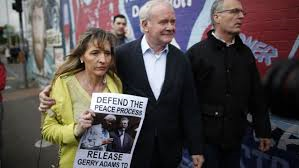
There couldn’t have been a more intimidating sight to the children of Jean Mc Conville than the scores of republicans who turned up on Saturday afternoon, and who congregated at the top of Derby Terrace in the Divis estate in West Belfast, and spilled onto the Falls Road to listen to speeches at the unveiling of a wall mural dedicated to the Sinn Fein leader, Gerry Adams.

A few yards up again, old comrades of Brendan Hughes, from D Company, or “the dogs”, as they were locally known, were out with flags and black regalia, commemorating in the memorial garden.

Graffiti had also appeared that week citing “Boston College Touts”, in strategic places on the Falls Road.

Intimidating, because Michael McConville had that weekend, given an interview to BBC Radio Four, in which he stated he couldn’t hand the names of those who he believed to be involved in his mother’s murder to the police, because he “would be shot”.

Sickening, because the location of the rally, and the wall mural, is a few hundred yards from where Jean McConville was dragged from her home, in front of her screaming children.

Michael McConville was further asked why he felt there would be reprisals for him if he named the members of the IRA involved. “Everybody thinks the IRA have gone away,” he said “but they have not.”

At that rally held by Sinn Féin, a former IRA head of Intelligence, Bobby Storey – now the chair of Belfast Sinn Féin, told the gathered crowd he was sending a direct message to both governments and the “cabal,” adding the following phrase “we aint going away, you know”. Those were carefully chosen words. Bobby Storey should be asked to clarify them.

There was no public outrage at this fact. A few newspaper columnists picked up on it, but there were few hard questions asked of Sinn Féin about the perceived threat to Michael McConville, which he had explained publicly the previous day.

Sinn Féin used their brass neck to hold a rally where they turned the victim in the Jean McConville case from the widowed mother of ten who was murdered, to Gerry Adams. Key figures made sure they were in attendance. There, was Sue Ramsey, seen laughing and joking with her sister, father and other close friends. There, was Martin Mc Guinness, suited and booted. There, was Martina Anderson, looking like a grief stricken woman, forlorn and clutching onto a poster of Gerry Adams with Nelson Mandela, looking, for all accounts and purposes like a relative holding a missing person poster.

Image

The irony was not lost. Are Sinn Féin completely devoid of all traces of humanity? Gerry Adams, by that stage, had only been away from the republican family for a matter of days. Jean Mc Conville, the real victim in this case, in case anyone had lost sight of that fact in the resultant Sinn Féin spin, had been missing for years from her children. She is 42 years dead this year. Her body wasn’t found until 31 years after the IRA secretly buried her after breaking her bones and shooting her dead. Her children were all split up and taken into care. The effects have been far reaching across the Mc Conville family, and they continue to this day.

What ordinary decent person could be failed to be moved by their plight? But – for Sinn Féin, it wasn’t about supporting the McConville family in their search for justice and accountability for their mother’s murder. It was about making a martyr and a victim out of Gerry Adams. It was about applying political pressure to try and thwart the criminal investigation. It was also about an election campaign. Adams gave a press conference, flanked by key election candidates under a Sinn Féin election poster. Wall to wall coverage resulted. The press conference by some of Jean McConville’s children was swallowed up in the media furore.

Michael McConville should have nothing to fear from the IRA. He is publicly protected in the sense that should anything happen to him, people will know exactly who was behind it. Republicans are not stupid. They have succeeded in the short term, to have their leader released to the delight of his supporters. However, the court of public opinion will be with the family of Jean McConville throughout the rest of this murder investigation. Sinn Féin should report the names of those who were involved themselves to the police, in a show of solidarity with Michael McConville.  If they really do support policing, what’s the problem?

After all, the dogs on the street know who did it.

Tagged with: , ,
Posted in Uncategorized

Jean Mc Conville investigation – Gerry Adams arrested.

Vixens broke the story this evening that Gerry Adams, President of Sinn Féin, has been arrested by the PSNI in connection with the ongoing investigation into the murder of Jean Mc Conville.

Mr Adams (65) presented himself with his solicitor, Seamus Connolly, for questioning by voluntary arrangement this evening, and was subsequently arrested.  He is now being interviewed as a suspect in connection with the matter.

Jean Mc Conville was abducted from her home in the Divis flats complex in 1972 by the IRA, murdered, and secretly buried.  Her body was eventually discovered in 2003 in Dundalk.

In a statement tonight released by Sinn Fein, Mr Adams said “While I have never disassociated myself from the IRA and I never will, I am innocent of any part in the abduction, killing or burial of Mrs Mc Conville.”

Tagged with: ,
Posted in Uncategorized

Most oft used N.I Politicians’ Phrases

“The reality is…” Coined in 1997 and used mostly by republicans. Close your eyes. Think of the Talkback music starting all those years ago and David Dunseith skilfully interviewing politicians on the peace negotiations. Who can you hear spouting in nearly every sentence “David, the reality is..?” Yes, it’s none other than Sinn Fein’s Mitchel Mc Laughlin. Now almost every politico says it. Regularly.

“Yes, but the point I’m making is…”   This is normally used to deflect away from a question which the interviewee is uncomfortable being put on the spot about.

“We have to find a way to deal with the past…” Usually used when some new hair brained idea is being courted to the public arena regarding dealing with the past. How many times was this phrase used in the run up to Haass? Vixens lost count!

“At the end of the day…” This phrase is oft accompanied by a whiny superior toned voice. Used to state the obvious.

“Situation” – Used by everybody. Now cannot be used without hearing those Dublin Trolls. Sounds better when spoken by a Derry politician.

“Lets be clear about this.”   You can be sure that when a politician uses this phrase, they haven’t a clue what they’re talking about either.

“But the point I’m making is” – roughly translates as, “no one understands me”.

‘We made proposals and they went out to a public consultation’…   This is a great deflection line – it is either used to back up a politicians stance  – and put the responsibility onto the voters – or used when a politician is stalling for time.

“Anti peace process securocrats”… – Vixens believes the reality is that we do not, in this situation, need to explain the type of politician who comes up with such gobbledygook.

“You see (adopt the patronising tone of Gerry Adams here) what you have to do is, you have to view this in the context of….. the people who voted for Sinn Fein deserve our respect…”  You can hear him too, cant you?…

And its not just Gerry Adams who uses stock phrases, some of the other Northern politicians have their own little gems.

Nigel Dodds – “the reality is”

Billy Hutchinson – “let’s be clear”

Martin McGuinness – “tremendous”  – -usually when he’s not talking about “dissident journalists”.

Nelson McCausland during the DSD inquiry – “I cannot recall”

Theresa Villiers – “That will be a matter for the inquiry”

Jim Allister – “Terrorists, in Government?” (pitch goes up two octaves) 


Tagged with: ,
Posted in Uncategorized

Former CIRA Commander Tommy Crossan shot dead in Belfast.

Image

A former Continuity IRA Commander, under death threat from the organisation he once led, has been shot dead in Belfast today.

The dead man, father of four Tommy Crossan (44) an election candidate for Republican Sinn Fein in 2001, fell out of favour with the CIRA faction, amid allegations that he was an informer and using the organisation’s name to extort money from businesses.

The shooting happened in the West of the City on the Springfield Road area, in a complex known to locals as “The Peter Pan” at 5pm.  Local reports indicate that Mr Crossan was taken into the yard of a fuel depot in the complex by three men before being shot up to seven times.  A priest, father Tony Devlin later arrived on the scene and administered the last rites. The gunmen fled the scene in a red BMW which was later found burnt out in the Beechmount area.

Crossan served five years in Maghaberry for a 1999 gun attack on Woodbourne RUC station. He was later given a suspended sentence for his role in a £50,000 extortion attempt on a Dungannon businessman. It was this sentence which led to rumblings within the Continuity IRA that Crossan had been given a lighter sentence for passing information to Intelligence agencies, and led to a “court martial” in 2011. He had rejected these claims in several newspaper interviews, and openly walked around West Belfast sporting a tattoo saying “Only God can judge me”.

Tagged with: , , , ,
Posted in Uncategorized

“The long lethal years of The Jackal” (Jeanne Griffin)

The story of Robin Jackson, UVF Mid-Ulster Brigade leader and alleged RUC Special Branch agent.

Image
For decades journalists and television broadcasters were afraid to mention him by name, referring him only by his sinister soubriquet “The Jackal”.  But he has been dead for almost 16 years and the name Robin Jackson has come to symbolise the senseless violence and sheer bestiality that the Troubles wrecked upon the island of Ireland and beyond. Dubbed by Kevin Dowling “Lord High Executioner of the North’s notorious murder triangle”, over 50 murders have been attributed to him including some of the worst atrocities carried out in the thirty years of the conflict. In addition to being an Ulster Volunteer Force leader, it has been suggested by HET and several judicial inquiries that he worked as an RUC Special Branch agent.
 
The biographical details fail to reveal much of this man  who inflicted so much suffering on his victims, the majority of whom were strangers to him, although he did not flinch at shooting dead his brother-in-law (for allegedly informing) and his paramilitary comrade Billy Hanna, from whom he took over as leader of the ruthless UVF Mid-Ulster Brigade. Born Robert John Jackson on 27 September 1948 in Donaghmore, County Tyrone, he was brought up in a Protestant family whose roots in the area ran deep. In 1972 he joined the UDR and sometime after that the Ulster Volunteer Force. He was married and earned his living by delivering chickens for Moy Park’s food processing company. It is alleged he killed his first victim in October 1973. Although he was arrested for the murder of Patrick Campbell and the latter’s widow picked him out at an identity parade, charges against him were dropped in January 1974, leaving him free to help perpetrate the deadliest atrocity in one single day of the Troubles: the Dublin and Monaghan car bombings on 17 May 1974 which left a total of 33 people killed and close to 300 injured. Journalist Joe Tiernan maintains that Jackson transported the bombs across the border in his poultry lorry and that together with the operation’s mastermind Billy Hanna, delivered them to the drivers of the designated bomb cars at a North Dublin car park. Before the devices exploded that evening in Dublin’s Parnell, Talbot and South Leinster streets, Jackson and Hanna were already back at a Lurgan soup kitchen where they handed out food parcels it being the third day of the UWC strike.
 
The following year 1975, after he reportedly shot Hanna dead and assumed command of the UVF Mid-Ulster Brigade, he himself organised what is probably the most senseless and baffling incident throughout the conflict which left three members of the popular Miami Showband lying dead in a field and the other two injured, one gravely. The band’s minibus was ambushed at a bogus UDR checkpoint at Buskhill, County Down outside Newry by armed UVF members wearing British Army uniforms. When the bomb they had loaded onto the van exploded prematurely killing two of the gunmen, the remaining UVF gang opened fire on the bewildered band members. Jackson’s finger prints were later found on the silencer of the Luger used to kill trumpeter Brian McCoy. And although he was taken into custody at Crumlin Road jail and went on trial charged only with possession of the silencer, he was acquitted on 11 November 1976.
 
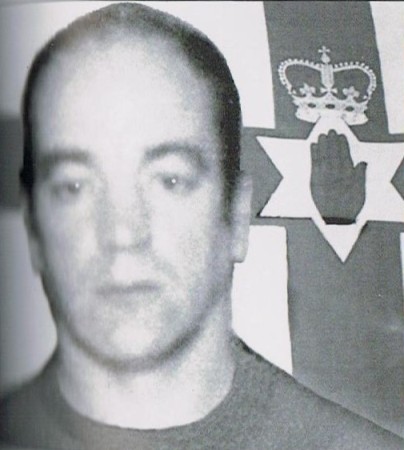
Described as sardonic and dedicated, Jackson was a small, well-built man with receding dark hair and strange dead-looking blue eyes. He was highly suspicious by nature and so paranoid that he destroyed almost all photographs of himself including family and school pictures. Intelligence officers acquainted with Jackson stated that he was a psychopath who would dress up and attend the funerals of his victims because he felt the strong need to “make sure they were dead”.  He often carried out his killings whilst delivering his chickens as RUC Special Patrol Group officer John Weir alleged in an affidavit. Weir who, together with another RUC SPG officer, was convicted of the 1977 murder of Catholic chemist William Strathearn, maintained that Jackson was the actual triggerman in the killing and after shooting Strathearn dead on his doorstep, drove off to deliver some chickens in his lorry. He was never questioned about the murder. An RUC detective said he was not interrogated for “reasons of operational strategy”. Weir however, insisted that Jackson was “untouchable because he was an RUC Special Branch agent”. Despite all the murders and bombings attributed to Jackson which also included the Reavey and O’Dowd shootings, the execution of IRA member John Francis Green and the bombing of Kay’s Tavern in Dundalk, Jackson was only convicted once:  of weapons possession in 1981 and served just a little over two years of a seven year’s prison sentence.
 
Was Jackson a protected RUC Special agent, with a licence to kill and wreck mayhem on the innocent people of Northern Ireland and the Republic? We will most likely never know. He died of lung cancer at his Donaghcloney home on 30 May 1998. His funeral had none of the militaristic trappings and gun-volleying accolades normally bestowed on dead paramilitaries. Instead his burial at a Church of Ireland graveyard in Lurgan was a private affair attended by only close friends and family members and the odd member of the murky world of Intelligence.


Tagged with:
Posted in Uncategorized

Quiet Peacemakers

g


SUSAN HUGHES ART EXHIBITION – ÁINE CARSON

WHEN you’re of the nosey persuasion, you tend to get invited to things.  I have a mate who pokes her nose into everything.  She brings me with her and I write about it.  Sometimes people tell her to bring a different plus one.

This week we boarded one of Translink’s finest number 20 buses to Stormont.  Coming from Turf Lodge, this was a day out for us and we chatted like two Primary school kids going to the zoo.

Strolling up the big hill, we took in the scenery, the middle class dog walkers and our right to also enjoy this beautiful public property.  I thought about bringing my own wee beagle terrier for a run out, he would love it.  But he too is excitable in new places.  He’d probably be treated like a Shinner in Carson’s gaff – allowed to be there but most unwelcome.

After much panting, wheezing and plans to flirt with security because both of us forgot our ID, we made it up to the Long Gallery.

It was like every other art exhibition I’ve been to.  Sophisticated artsy type people milling around networking with free wine.  Then there was us two scruffs with water. Because it was a school night.

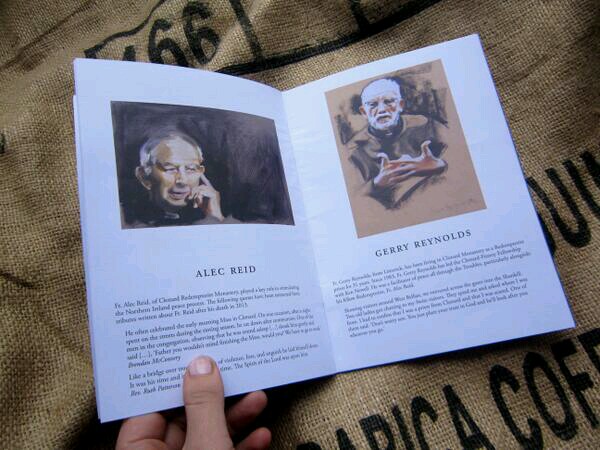
The good thing about my mate is, she knows a random mix of people.  She was invited by the Artist Susan Hughes.  I’m told Ms Hughes is an art teacher who took a year out to complete the work which was sponsored by Basil McCrea.The exhibition is comprised of 33 oil portraits of some of the individuals who were, and are, continually committed to working quietly and steadily in the background to facilitate peace and reconciliation in N.I, and is well worth a visit.  It will be hung in May 2014 in the 174 Trust at Duncairn.

The chum introduced me to the Reverend Ken Newell, retired now but worked closely with Fr Gerry Reynold’s within the Clonard-Fitzroy Fellowship.

I can see why he has been acknowledged as a quiet peacemaker.  He didn’t know me or that I have issues with God and have little time for religion – he just stuck his big gentle man hands out and shook mine vigorously with a big welcoming smile and a ‘lovely to meet you’.I thought about all these people who have their portraits displayed in our new parliament.  Only knowing a few of them to see, I was interested in those I didn’t know from Adam.

Most of them had a Christian connection.  Again, dispelling my own prejudice of the religious orders too busy counting shekels while the people outside killed each other over supposed religious difference during the troubles.

Of all the paintings, one that struck me was of Ian Milne.  A funeral director, he is a former member of the Orange Order and trained mediator.  He has facilitated talks between the Orange Order and Sinn Féin and the Orange Order and Dublin Government.

His brief biography said:

‘In Portadown and Lurgan there were very few funerals conducted by Protestant for Catholics or Catholics for Protestants.  About 6 years ago someone walked into my office looking for me.  ‘Do you bury Catholics?’ hesaid.  ‘Only if they are dead’, I replied.  ‘You’ll do me,’ he said.  My philosophy in life and in my role as a funeral director is summed up by the phrase: ‘The pain of loss is the same for us all.’

And it’s true.  Whether you have lost someone to a natural death or trauma– everyone feels the same pain.

We’ve got a lot to thank these silent heroes for.  They sought no prizes, they just wanted peace -and we are reaping the rewards.


Tagged with: , , , , ,
Posted in Uncategorized

“Up da Provies!” Belfast City Council property used for IRA remembrance event.

Leisure Centres are no stranger to muscle. Gymnasiums ae full of posers, pumping iron, preening themselves and feeling good about every show of strength. You expect that. What you dont necessarily expect is to see pictures of Belfast City Council’s Whiterock Leisure Centre hosting an event in its recreation hall, showing republicans exerting muscle in a show of strength of a different kind. Like this.

Image

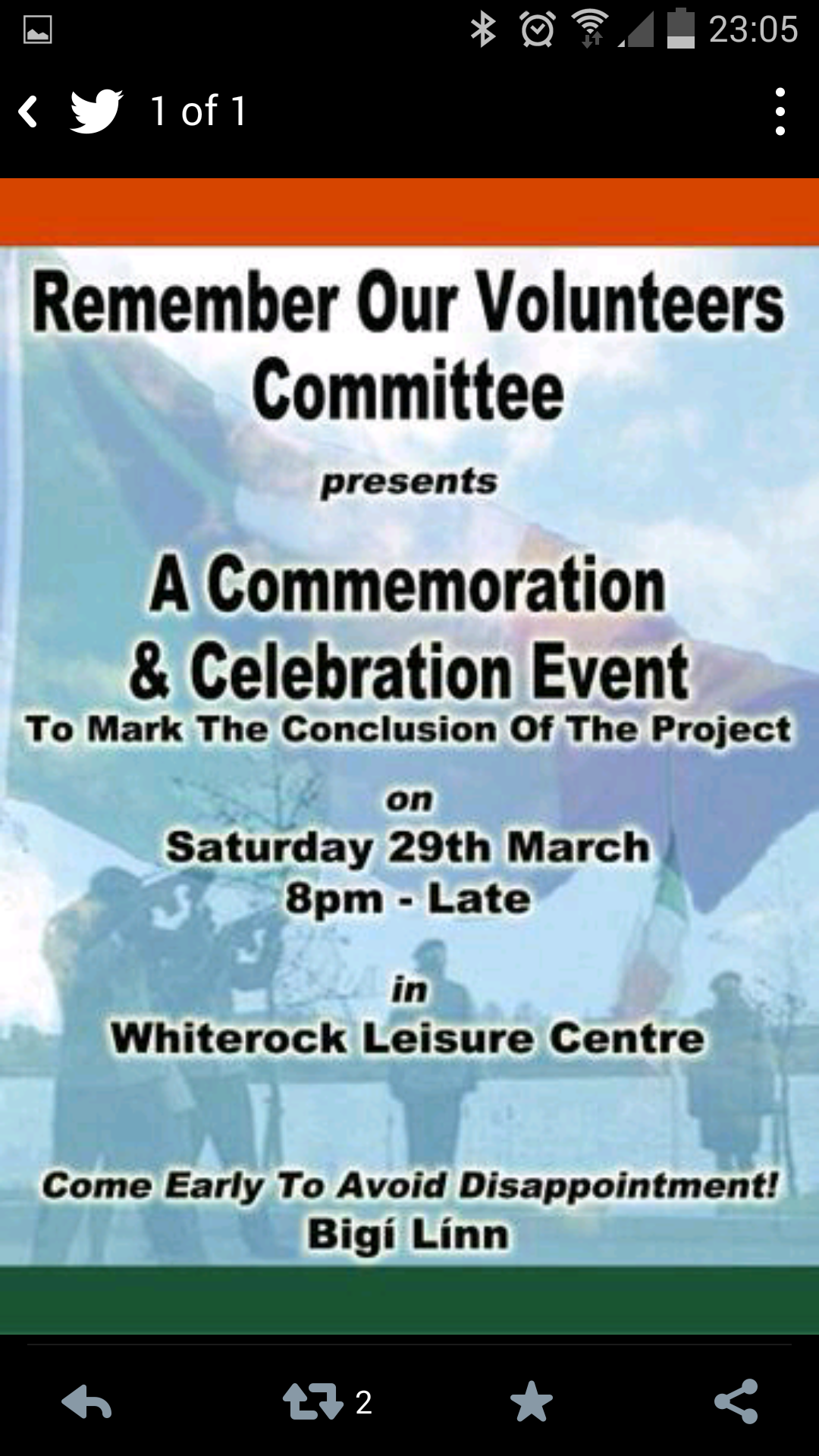
Who gave the go ahead for this event?  The Parks and Leisure Services Committee approved an application in February from an organisation called Cumann Spoirt an Phobail. It was approved on the basis that that constituted organisation, which has in the past received funding from the PSNI and other agencies; would abide by guidelines set by the council. Their application was made on the basis that it was a ‘community celebration’ andthey wanted to give presentations to local people for ‘sport, culture and development.’ No where does it mention an IRA colour party.  However, posters were out well in advance, and advertised the nature of the event widely, so there is no excuse for not knowing what was going to be staged. The posters are unambiguous – except for the link to Sinn Féin. They, are mentioned nowhere in the poster but clearly had a hand in the organising. Here it is.

Screenshot_2014-03-29-23-05-39 (1)

Fast forward to Saturday – after hours for the Leisure Centre in question. Pictures start appearing on user @patrickmul7 ‘s twitter profile. “Whiterock Leisure Centre Murph Colour Party’, was the headline for one. As you can see, it shows a colour party, normally associated with events honouring IRA volunteers – past and present – and lined up behind are more people in uniform. Adorning the walls of the Leisure Centre are banners of IRA personel and The local Sinn Féin cumann.  Alcohol can clearly be seen being consumed on the premises.

Belfast City Ratepayers pick up the tab for these centres. Those rates fund running costs like electricty etc and staff wages. So, are Belfast ratepayers paying for the privilege of an event commemorating the IRA on a premises which should be inclusive to all? Is the city for everyone really promoting inclusivity by allowing its premises to be used for events like these? How many non republicans are going to feel confident going to Whiterock now,  after its hosting of an IRA event?

Yesterday, some twitter users started to question the use of the hall. Patrick Mulvenna, who was still tweeting from the event, responded “Up da Provies!” He followed it with a tweet to Loyalist Group UPRG “Its our city hall if you want to be a part of it, on behave (meaning behalf) of the council we remember our dead #TAL (Tiochfaidh Ar Lá)” It is this ignorance, this “rub it in your face” attitude which causes outrage amongst those opposed to or on the receiving end of IRA actions. It’s republican triumphalism in its rawest form.

Sinn Féin have been outplaying a strategy of short sharp shocks in relation to how it handles the past. Castlederg and other recent republican commemorations are not ill thought out PR disasters. They’re planned, with the full knowledge of knowing they’ll cause offence. It won’t help with Unionist engagement, but Sinn Féin does not care about that. It is conditioning the general public with a successive trail of events honouring its dead, in order to take the sting out, bit by bit. The 100th anniversary of Cumann na mBann this year is seen as a dry run for the centenery of the Easter Rising in 2016. And, in the meantime, Sinn Fein will try to marry its volunteers of a seperate IRA, with those of 100 years ago as it hijacks and monopolises history once again.

Belfast City Council have questions to answer in relation to this event. Why was the event given approval and who approved it? Was there any cost to the taxpayer from having the building open? How much money changed hands for the hiring of the hall? How many members of staff had to stay in the building to facilitate this event? Did the event breach guidelines for usage of Whiterock Leisure Centre? What sanction,  if any,  is available with regards to the applicant and will it be taken?

Whatever the response, Sinn Féin will continue to promote the “Up da Provies”, message, and seek to glorify and treat as benign the ruthlessness of that organisation and its volunteers. “Up da Provies?” Hardly the stuff of Unionist Engagement.

Posted in Uncategorized

“The Night the Music Cried.” Unanswered questions surrounding the Miami Showband massacre. (Jeanne Griffin)

The red torch moving in a circular motion like a bloodshot eye in the middle of the dark Ulster road didn’t cause alarm for trumpet player Brian McCoy. A veteran member of the popular cabaret group, the Miami Showband, he calmly announced “UDR checkpoint ahead” to his fellow band members inside the minibus he was driving home to Dublin, following their successful gig in Banbridge only several hours before. It was 2.30 am on 31 July 1975 and the place was Buskhill, just outside Newry. McCoy, a native of Caledon, County Tyrone was used to military checkpoints at all hours of the day and night. He pulled the van over to the layby and handed his driving license to the fully uniformed UDR soldiers who appeared friendly and  nonchalant.

 
“Goodnight fellas. How are things? Can you just step out of the van for a few minutes and we’ll just do a check?” These seemingly innocuous words were the opening lines for what is probably the most baffling and inexplicable episode in the whole twisted nightmarish course that the Troubles took as paramilitaries waged violence, death and bloody mayhem for three decades. We know the horror story that quickly unfolded after five of the six Miami band members were made to line up facing a ditch as two of the soldiers planted a bomb inside the minibus. Even then Brian McCoy nudged bassist Stephen Travers telling him not to worry as this was “British Army”.  It was not. The armed uniformed men who numbered about 10 in all were actually members of the UVF’s Mid-Ulster Brigade led by the notorious Robin Jackson who had masterminded the entire bogus military checkpoint. After the bomb exploded prematurely killing two of the gunmen and blowing the van in half, the remaining “soldiers” opened fire on the dazed Miami Showband who had been blown into the field by the force of the blast. Brian McCoy was the first to die having received nine bullets in the back fired from a Luger pistol which would be later found containing Robin Jackson’s fingerprints.  Singer Fran O’Toole and guitarist Tony Geraghty tried vainly to run away but were pursued by the gunmen and shot dead. Only Travers and saxophonist Des McAlea survived.
 
There was a trial but only three of the gunmen were convicted and imprisoned: two serving UDR soldiers Lance-Corporal Thomas Crozier and Sergeant James McDowell (who had actually issued the orders to fire on the band members); and James Somerville who was a former member of the UDR. There have been documentaries, books written and even a HET Report into the atrocity, however the more light that is shed on this drama the larger the shadows that loom to only obscure the entire truth from being revealed. Why was the band targeted by Robin and his not-so-merry men? And who was the officer with the “crisp English accent” who appeared on the scene just before the explosion and only issued instructions to Sgt McDowell? He drove up in a car but was this car damaged in the blast? Can we honestly buy the explanation that the UVF wanted the bomb to go off just after the van had crossed the border in order to portray the band as “bomb-smugglers for the IRA”?  And if this was their motive wouldn’t it have been safer for the UVF to plant the bomb under the van during their Banbridge gig rather than risk detection by an actual military patrol after setting up their bogus checkpoint on a busy dual carriageway? Why don’t journalists pose these questions to Travers and McAlea rather than ask them to speculate whether or not the English officer was Captain Nairac?
 
Let’s look at the facts. The Miami Showband was a Dublin-based band with both Catholic and Protestant members. The trumpeter Brian McCoy was the son of the Orange Order Grand Master for Tyrone and his brother-in-law was a former B Special who served in the UDR. He had been driving the van that night and was the first to be hit by gunfire. The Luger which was used to murder him was later discovered containing Robin Jackson’s prints. Jackson was also a former UDR soldier as well as a suspect in the 1974 Dublin and Monaghan bombings. Could he have approached McCoy at some earlier stage and asked him to help the UVF as a loyal Protestant and when he refused decide to carry out an act of vengeance against McCoy and the entire band? Jackson had been arrested as a suspect in the ambush but released without being charged shortly afterwards. Travers alleges that as soon as they were blown into the field the gunmen started firing under Sgt. McDowell’s orders  Didn’t the bomb also take them by surprise? And how far were they standing from the van when it exploded? These are questions that should be asked –  yet they are not. All their collective concentration centres on the elusive English officer with the cut-glass accent. Why?
Tagged with: , , ,
Posted in Uncategorized