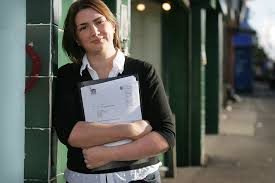
Lives at stake in NI because of denial of 34 cancer drugs.

You’ve been diagnosed with cancer. You are frightened, and upset, and uncertain of the future. You have no control if or when this disease is going to kill you. You resolve to fight it using every means possible to prolong your life, so that you can spend precious time with your loved ones.

A treatment is available which will most certainly help you to do that. Except its not available. Not in Northern Ireland. 34 life saving cancer drugs are denied to patients here. It’s costing lives.

Some of them are not available in Scotland or Wales either, and the situation is forcing women to go to England in desperation to avail of them there. It’s been termed a “postcode lottery”, and patients who Vixens spoke to are querying why cancer patients’ lives in England are deemed more important to save or prolong, than their counterparts in Northern Ireland. Because the devolved assembly has not introduced it, a cancer drugs fund is not in place here for drugs unavailable on the NHS.

The SDLP’s Fearghal Mc Kinney has called on the Health Minister, Edwin Poots, to take action without delay. “It is utterly shameful that cancer patients in Northern Ireland continue to be discriminated against in the supply of life saving drugs. The inequity that exists between cancer patients in Northern Ireland and those in England must be addressed. An urgent action plan is needed. I will continue to press the Health Minister on this issue to ensure that patients and their families get the best deal”.

One of the drugs denied routinely, is Avastin. Research has shown that this drug could add years to the llives of those with Ovarian Cancer, yet it is not available to many patients in the UK. It is the only new treatment in the neglected field of this cancer’s research in twenty years.

It can cost between £20, 000 to £30, 000 to administer Avastin per patient. Campaigner Una Crudden – herself terminally ill from Ovarian Cancer – believes that no price should be put on a life. Considering her chemotherapy cost approximately £100,000, its a relatively low figure to pay for extra time with loved ones.

Avastin, and the other 33 cancer combatting drugs could be introduced, along with a Cancer Fund to administer them, with relative ease. Consultants have already indicated privately that should they be available, patients with cancer would respond positively to treatment. It is inherently wrong that someone, already fighting for their life, should even have to contemplate being refused something which could help them to do that.


Tagged with: , , ,
Posted in Uncategorized

Interview with Una Crudden – “This may be a silent killer, but I’m not going to be silent about it. “

Image

Una Crudden is 60 today.  It’s a birthday she didn’t think she would see.  Five years ago she was diagnosed with terminal ovarian cancer.  She had originally been misdiagnosed.  That misdiagnosis meant that by the time her cancer was caught, there was nothing could be done.  She was given 3-5 years to live.  Five years on and she knows she’s on borrowed time.  Most people could be forgiven for concentrating on the time they had left, and on all of the feelings of sadness, anger and frustration which inevitably come to any person who have been told they have a few years to live.  Not Una.  This West Belfast grandmother is a one woman powerhouse, determined to help every woman in Northern Ireland.

Una has been running a one woman campaign to raise awareness of the signs and symptoms of Ovarian Cancer, also referred to as the “silent killer”, due to the fact that it is low profile.  She is determined to change this through her fight for a solo awareness campaign to ensure that women will spot the symptoms of this disease.  She has achieved cross community political support – particularly from the Stormont Health Committee- (a rarity to have them all in agreement) – on this issue.  However, the Health Minister, Edwin Poots, has said no.  Una is frustrated by this; “What is the point of having a Health Committee unanimously in support of this – a campaign which will save lives, if the Minister doesn’t listen to the majority?  Edwin Poots is a nice man, and he has been supportive, but he really needs to do the right thing on this issue.”

She has a new tumour in her right lung, and is going for review at the end of the month.  She has already been through four rounds of chemotherapy.  She has had her lung drained of fluid, a procedure she found “horrendous”,  and lost her hair.  But her humour shines through.  “I’ve saved myself a fortune in hairdressing with my two inches of hair”, she replies impishly, when I ask her how she is doing.

When I ask about her fight to raise awareness, though, Una’s passion and determination takes over.

“It’s too late for me.  I’m terminally ill.  I’ve spent the last two years of my limited life fighting for this, time which could be spent with my family.  I’m doing that so that women do not have to needlessly die.  This is a cancer which can be treated, if the signs are caught in time.  The problem is that lack of awareness means that by the time it is caught, women are already in the terminal stages.  A solo campaign will undoubtedly save lives.  And for every day the Health Minister says no to this, another woman will be put at risk.”

“I won’t see my newest grandchild who is due soon, grow up.  I probably won’t see my eighteen year old son graduate.  I didn’t drink, and didn’t smoke.  I walked six miles a day.  If I can get Ovarian Cancer, it can happen to any woman out there.  This campaign belongs to all of the women in Northern Ireland.  What better present could you give any woman for mother’s day, than to sign the petition?

The petition she refers to is needed to put pressure on the politicians who Una believes can introduce the solo awareness campaign relatively easily.  It is estimated that it only costs 300,000 pounds to do so.  Considering a few rounds of chemo per person can cost £100,000, it’s the equivalent of three patients receiving treatment.  The money spent on a solo campaign would pay for itself in prevention.  It would also save lives.  So why is Edwin Poots refusing to give the green light?

In short, he has stated that if one solo campaign was granted, others would follow. Una believes that awareness of any cancer is welcome; however, there is nothing to stop the Health Minister in running additional solo awareness campaigns of other cancers such as pancreatic – which also need awareness of symptoms. “Wasted time is wasted lives”, says Una poignantly.  “How many mother’s day chairs will be empty this year because women who have died from ovarian cancer could have been saved?”

The figures speak for themselves.  Only 5% of money finds its way to Ovarian Research.  In 20 years, no new drugs have been made available for treatment.  Of the 178 women diagnosed with the condition annually across Northern Ireland – 119 die.  37% of women in Northern Ireland are not at all confident about identifying the symptoms.

Una has had one success that she is proud of.  Recently, a pathway for GPs in the North was introduced to ensure that if women present with symptoms, doctors must follow investigation guidelines accordingly.  This will undoubtedly save lives.  A simple blood test, CA125 which costs £16, can also help.  Una urges women, through her twitter account regularly to ask for this test if they feel something is amiss. “There were five of us diagnosed together – aged 36 to 66 – and I am the last one left. The other four have died,” she said.  “Every one of us was misdiagnosed with either Irritable Bowel Syndrome or diverticulitis.

Una is hugely thankful for the support which she has received from a charity based in England, “Target Ovarian Cancer”, which has developed leaflets which Una distributes throughout Northern Ireland, in shopping centres, and schools, where she also gives awareness and life coaching talks voluntarily to sixth formers.  But she believes much more can be done.  “If other charities in the North were more robust in raising awareness of Ovarian Cancer, people like me wouldn’t be terminal.  I hadn’t seen one leaflet about this cancer before I was diagnosed, and I’ve yet to see one now that I am.  Awareness can help to prevent deaths.  I believe that other charities can step up to the mark.  If this is what I can achieve, on my own, just think how many more lives could be saved if a solo campaign was introduced?”

Despite knowing that Ovarian Cancer will claim her life, Una remains upbeat.  Although she has cried regularly with the frustrations of trying to ensure that this solo campaign is brought in before she dies, she believes that terminal cancer has allowed her to look at the world differently also.  “Cancer can kill my body, but not my spirit”, she says matter of factly.  “I see the best in people now.  Every day, no matter what the weather, is a wonderful day.  I don’t take things for granted.  I just want every woman out there to help to save their own lives, as you never know what is around the corner.  You can do that by backing this campaign, and by signing and sharing the petition. Tell Minister Poots, that he needs to introduce it, and do it now.  This may be a silent killer, but I’m not going to be silent about it.  Lives are at stake”

 Ovarian Cancer: Key Symptoms

 
·         Persistent pelvic or abdominal pain

Lower Back Pain

 
·         Increased abdominal size/persistent bloating

 
·         Difficulty eating or feeling full quickly

 
·         Urinary symptoms (needing to go to the bathroom more urgently/often than usual)

 
Occasionally there can be other symptoms including changes in bowel habits, extreme fatigue, and unexplained weight loss.

If you have 2 or more of these signs and they are persistent, go to your GP as soon as possible and get checked.


Tagged with: , , , ,
Posted in Uncategorized

Her name is Bridget, and shes not “just an alcoholic”.

“I cried when I saw the footage.  I am a human being you know.”

The poignant words of 23 year old Bridget Mongan, as she explained her hurt at being left in a bus layby by members of the PSNI on St Patrick’s Day in Derry.

And she’s right.  She may have been too drunk to move herself on the day in question, but it is absolutely inexcusable for police officers to leave anyone in that state on a pavement, alone and vulnerable, never mind in the path of buses.

This story, tragic as it is, could have been much worse.  Footage, taken on a mobile phone, shows a bus slowing down just after the PSNI have driven off.  Had that bus driver not seen her, she could have been seriously injured or killed.  She could have been attacked, beaten, raped, or robbed.  She was clearly unable to defend herself if such a circumstance arose.  She explained later how incapacitated she was.  “I don’t remember how I ended up lying on the road.  I dont remember a whole lot…”

The Police Ombudsman has confirmed it is investigating the incident, and the officers in question will no doubt be questioned regarding the circumstances.

The footage is clear.  Whatever the reason, a 23 year old vulnerable woman was left in a dangerous place.  Bridget, speaking to the BBC, believes that the officers in question should lose their jobs.  “I am an alcoholic and I’m not proud of it but what they did to me on Monday was unacceptable.”

Alcoholism is a terrible addiction, and we are used to seeing drunk people in cities around the country.  How many of us have seen the alcoholic in the street, and have crossed to the other side to get away?  How many of us feel uncomfortable when our children are with us and a street drinker asks us for loose change?  How many turn up our noses?  We’re all guilty of it at one time or another.  You could be forgiven for thinking, though, that having seen someone dumped on the road – frankly – like a sack of potatoes, that someone would have come to this young womans aid more quickly.  Is it too much to ask that those employed in jobs, and given training in how to deal with vulnerable people, would give those very people due care and attention in the course of their policing duties?

We need to remember that people with alcohol problems have names.  They live, and breathe like we do.  And they have feelings too.  We dont know what was going through the police officers’ heads that day, but we can assume, having seen the footage, that Bridget was not treated with the dignity that she deserves as a human being, regardless of her undiginfied state at the time.

She deserved to be cared for, and looked after, like any other person.  Would the officers, or anyone else have left someone with a head injury in a bus layby and simply driven off?  Or a person who had taken a heart attack?  No.  But, because Bridget Mongan was under the influence of alcohol, it is likey those who didnt come to her aid made both an asumption, and a judgement that spending time with her insuring she was ok was not a priority.

It was her alcoholism that was seen and judged.  Rather than view her as a 23 year old vulnerable woman, police clearly saw an alcoholic who wasnt worth the extra seconds it would have taken to simply move her onto the pavement or to another place of safety.

When this society, and those whose job it is to protect them, start to view people as people – before their surrounding issues overtake that view – then people like Bridget Mongan will be treated like the human beings they are.  She, and they, deserve nothing less.

Síofra O’Neill

Tagged with: ,
Posted in Uncategorized

The arrest of Ivor Bell

Vixens has learned that the 77 year old man arrested in Belfast this morning is veteran republican Ivor Bell.  Bell, who has been living openly in West Belfast for decades, was taken by the PSNI to Antrim Serious Crime Suite for questioning.  He has not been charged, but is being questioned in relation to matters surrounding Jean Mc Conville.

Reported to have been the former Chief of Staff of the IRA, and part of an IRA delegation which took part in talks with the British in 1972, Bell has remained an enigma in the folklore of republicanism in Ireland.  A quiet man, who has consistently stayed silent on his former life within the republican movement, and in particular his former relationship to Gerry Adams, the arrest of Bell raises a few questions.  

Much has been in the public domain in relation to the horrific murder and “disappearance” of Jean Mc Conville.  Most of that has been centred around Gerry Adams, former member of the IRA – now a Sinn Féin TD, and whether or not he played a part in ordering Mc Conville’s disappearance, as alleged by his former comrade Brendan Hughes and others.  Adams has consistently denied any involvement in Jean Mc Convilles murder, or disappearance.  However, given the recent furore over the Boston College tapes, and subsequent handing over to the PSNI, and the public interest involved in the case, public speculation had centred around the potential questioning of Gerry Adams.

Such questioning would appear to be unavoidable, given allegations which are in the public domain.  However, Vixens understands that senior detectives in the PSNI have to get clearance before such decisions to question would take place.  Whether clearance is given and Adams questioned or not remains to be seen.  

Such clearance was given for others to be questioned some weeks ago, however as the ‘On The Run’ coverage gained momentum, senior detectives were ordered to put a hold on any historical arrests until media focus died down. It appears the timing of this arrest was carefully managed.  Why?

Anyone involved in the murder and subsequent hidden burial of Jean Mc Conville should be held accountable.  There is no suggestion from the PSNI that Bell is either suspected of her murder or disappearance.  The arrest is centred around detectives trying to establish whether people can help them with enquires or not.

Ivor Bell is opposed to Adams strategy, and has been since 1985, when he was court martialled by the IRA along with others.  One wonders whether it is easier for the PSNI to arrest and question those opposed to Sinn Féin, than to have the man whom public allegations have centred on “help them with their enquiries”…


Tagged with: , ,
Posted in Uncategorized

Dissidents. People just want to live. Let them.

I had intended to write a light hearted blog piece tonight.  However, as I type, a blast bomb has been thrown, presumably by dissident republicans, at a police car, just off the Whiterock Area of West Belfast.  Another booby trap device was discovered in the Black’s Road area earlier today.

For anyone who doesn’t know the Whiterock area, its busy, there are shops and bars and taxi places, and more importantly, ordinary people going about their lives, even at 10:20pm on a Friday night.  The local supermarket is open 24 hours, and there are a number of petrol stations along that route.  The Falls and Whiterock roads are busy thoroughfares through parts of West Belfast.

Which makes the throwing of a large blast bomb, so large it was heard throughout the city, an act of pure unadulterated madness.  Any bomb, anywhere, thrown at any “target”, is of course wrong, but what makes this particular act all the more sinister is the wreckless disregard for injuries to people from within the community from which these bombers came.  At the time of writing, four civilians have been treated for shock, and a car belonging to a family, was hit by shrapnel.

The intended “target” was a police vehicle, which can only point to dissident republicans as the culprits.  The vehicle was damaged but the occupants, thankfully, uninjured.  Armed dissident groups in West Belfast have been growing over the last number of years, swelling their ranks by mopping up those disaffected by the peace process, local criminal elements, gangsters, former provisional militant republicans who no longer support  Sinn Féin, and anybody else who shows a blatant disregard for a push towards a normalised, civilised society in the city.  There are numerous groups, all at odds with each other, and with no cohesive political peaceful strategy .  And nor do they want peace.  Dissident republicans want agitation, a move away from the status quo that Sinn Féin moved the majority of its supporters towards, and they want to make themselves heard.  There is an election looming, and dissidents are making their mark in advance of voters going to the polls.

If these particular types of dissident republicans actually took a step back and thought about the impact such actions had in the past on West Belfast residents, they might see that the people damaged most by their “operations”, are the ones who live there.  When a pipe bomb, or suspect device is left, and police are called in to deal with the issue, it is ordinary residents who are moved out of their homes and inconvenienced, local schoolchildren who have to take the day off school, parents who have to take days off work to look after them, residents late for work, and appointments because they are stuck in traffic, and taxpayers who have to foot the bill, each time someone gets a bright idea to leave a suspect device in a residential area.

When local people are shot in the knees by inhuman thugs, lately by arrangement , not only are dissidents taking the law into their own hands and following the community enforcement taught to them by Provisional IRA members before them – but they are causing trauma to the injured, and the families around them.  There is a benign acceptance for such attacks in inner city Belfast, but people are fooling themselves if they believe they are being “protected”.  Sinn Féin are to be heard routinely condemning such attacks. While any condemnation is welcome, the irony of a party who created a vacuum in policing in West Belfast through the use of the IRA; and also by warning its residents that the police were neither welcome or acceptable, now loudly countering its own oft past peddled mantra is not lost.

Political dissident groups look set to take at least one council seat in West Belfast in the forthcoming elections, if they manage their vote well.  Blast bomb attacks such as this will set that vote back.  The people who threw the bomb tonight either don’t see that, or don’t care.  By and large, people in West Belfast;once they began to get a taste of non-violence, do not wish to see its return.  Even those opposed to Sinn Féin are mostly not in any way supportive of violent methods.

It’s time for militant dissident republicans to wake up.  They claim to be fighting for a United Ireland, yet they are the diehards, the ones who refuse to accept that support for violence in whatever name, is a thing of the past. People just want to live their lives, and God knows its hard enough in some parts of West Belfast to do so.  They don’t want to be put at risk by a few maniacs who care more about getting a “hit”, than about improving the quality of life of those around them.  People just want to live.  Let them.


M niChathail


Tagged with: , ,
Posted in Uncategorized

If the journalism ladder is broken, carve your own rung. Lyra Mc Kee.

Nearly two years ago, I received a tip. 31 years previous, a local politician, Robert Bradford, was murdered. It happened in 1981, a bloody and tumultuous year in Northern Irish politics. It seemed inevitable that the IRA would eventually kill an MP.

For years, however, it’s been rumoured that, before he died, Bradford was asking questions about “something sensitive”.

Now, this wouldn’t have been unusual for him. He was always digging something up, asking awkward questions when others wanted him to shut up. Yet the story intrigued me: a man who is always asking questions, working on one final revelation which he doesn’t get to see through. So I started digging myself.

At the time, I was running a small investigative blog, The Muckraker, which focused on small-time corruption and incompetency in local government. I hoped to one day grow it beyond myself, into a fully-fledged newsroom. Within months, those plans were abandoned as the Bradford story took over and evolved into a book.

On Monday, I launched a crowdfunding campaign to raise funds to continue my reporting.

For the uninitiated, crowdfunding is a (relatively) new way of funding projects. Say you need £10,000 to produce your own line of custom-made jewellery. You don’t know any fabulously wealthy investors and the bank won’t give you a loan. With a crowdfunding campaign, you would turn to the public for donations, offering rewards in exchange. For example, a £10 donation would buy one jewellery set. It’s a combination of charitable giving and pre-ordering a product before it’s made.

In my case, I’m offering prospective backers access to the book as it’s being written amongst other rewards ($5 per month being the minimum donation). The campaign is being run on journalism crowdfunding site Beacon.

On its first day, it smashed Beacon’s previous records, raising over $2,000 in one day. 5 days in, it has 68 backers with nearly $3,000 raised. Under crowdfunding rules, if I don’t hit my target goal – 200 backers in 21 days – I won’t get any funding so I’m frantically trying to spread the word and find 132 more backers by 31st March (which also just happens to be my 24th birthday).

Thankfully, the reception has been mostly positive. People have been wonderfully supportive. However, there has been some criticism, some of it coming from local media.

One established journalist was concerned that by launching the campaign and going direct to my readers, I was failing to “pay my dues”, skipping the induction process whereby young journalists learn the craft: starting on a weekly newspaper, covering the courts and working their way up the ladder.

It was an interesting point (though not quite accurate; I spent five years learning the trade through prolonged work experience placements and eventually freelance assignments). Still, it intrigued me because the ladder she speaks of is broken.

The belief that you’ll find a job by “paying your dues” is a myth which originated in a pre-Internet world – when it was true. It was a lie I and other young journalists were told as we trundled through months-long work placements without pay, racking up debts we couldn’t afford because we believed a job and stable pay awaited us at the end.

Journalism – or rather, the news organisations that produce it – is in turmoil. Reporters are being laid off every day, budgets are being cut and investigative journalism has all but been driven from the newsroom. The weekly newspapers today’s veteran journalists cut their teeth at are closing down and job opportunities have dried up.

A friend remarked recently how the local crop of adversarial, hungry young journalists are struggling to find work. Every time a job comes up, they’re competing with older, more experienced journalists who are also out of work, meaning they don’t stand a chance. And without budgets to fund investigations, newsrooms are loathe to hire them anyways. ‘Rocking the boat’ costs too much money.

For years, I felt lost. Finding journalism was like finding a soulmate; at just 15 years old, I knew this was what I wanted to do for the rest of my life. I did everything that the veteran journalist said I should. I worked for my local paper and a bunch of other news outlets for free for nearly four years. Every night, from 10pm until the early hours, I researched and wrote stories, pitching them to editors. I pulled my grades up from C’s to A’s because a local editor told me I’d never get into a newspaper without a degree. I did as I was told, kept my head down and bided my time.

By the end of my first year at university, I realised it was all for nothing. The industry was drowning; the freelance work I’d just started charging for, after years of being the work experience kid, dried up. At a careers fair, I asked a a lady from a prominent local newspaper if they hired investigative reporters. She laughed and said no. Investigative journalism was very much an excess of the past.

I wanted it so badly. If becoming an investigative reporter meant sweeping floors and making journalists their tea for another five years before getting a shot at it, I’d have done it. But the ladder was broken and I had no idea how to keep climbing.

So I dropped out of university. I didn’t see how a degree was going to get me closer to my goal. I went off and for the next five years, I tried to figure out what was next. Would investigative journalism ever be ‘in vogue’ again? And if so, who would fund it?

Eventually, I started a blog, The Muckraker, where I did what I did during my college days: researching and writing stories by night. I posted stories about corrupt businessmen and idiot civil servants. Something amazing started to happen.

People started reading what I wrote. Every time I posted a story, Twitter would go crazy. I would receive thank you notes from people I’d never heard of, telling me they appreciated what I was doing and not to give up. Tips flooded in. Despite the lack of investigative journalism in the press, it was clear there was a demand for it.

Two years later, I’ve just been accepted to do a PhD on the future of investigative journalism. The book is going well and the funding to continue my reporting will hopefully be in place by March 31st.

The generosity of both my readers and complete strangers has completely floored me. I now have 68 backers who, between them, have donated $2600. The next hurdle is meeting my goal of reaching 200 backers within the next 2 weeks.

Yet even if it doesn’t work out for me, that 68 people pledged nearly $3000 to support local investigative journalism is cause for celebration. At a time when newsroom morale is plummeting along with newspaper sales, it shows that public interest journalism is still valued.

I can’t offer career advice to anyone because, right now, there is no ‘career path’ into journalism. But if you’re staring at the broken ladder right now, wondering how you’re going to climb it: have faith. You’ll figure it out.

Click on Lyra’s crowdfunding link here to find out more about her project. http://www.beaconreader.com/projects/the-last-story-of-robert-bradford

Posted in Uncategorized

RAISING ‘GOOD CATHOLIC CHILDREN’ AS A SELF CONFESSED HEATHEN. Deborah Crawley

I was born into a catholic family and raised with catholic beliefs, I went to a primary school with a strong catholic ethos and then on to a convent girl’s school for secondary education. I learned at a very young age that questioning the plausibility of Bible stories was not the done thing. To question God was a sin (in fairness, I was questioning the teacher, not God!) and that in spite of God creating us in his own image and telling us to “Love one another as Jesus loved you” there were certain people that God didn’t like us to associate with. Like protestants for instance. Even as a child I couldn’t understand that one. God loves everyone, so long as they attend church in the correct building every Sunday…

The older I got, the more I questioned. And in questioning, I learned that religious division was the source of much suffering around the world, I genuinely couldn’t see other human beings as anything more or less than people just like me, regardless of their sex, the colour of their skin or their religious beliefs. These things generally have absolutely no bearing on who they are as people, they’re either good people or they’re not. So I couldn’t understand how the God I had grown up with could allow all the hatred, the prejudice and the bloodshed in his name. In fact, I knew he wouldn’t, so perhaps he was as fictional as Santa Clause and the Tooth Fairy? And if he wasn’t fictional and did allow it to happen, then I didn’t want to be a part of any religion.

When I had my first child, my religious beliefs were long gone, but  no sooner had she arrived than people were asking “So, when’s the christening?”  When I said there wasn’t going to be a christening, there were gasps followed by  “How could you do that to her?”. Over the next few months, I was under increasing pressure to ‘welcome the baby’, this translated to “Just bloody christen her will you!”   I was on the receiving end of many snide comments like “Well, I hope for your sake you’re right” and “Oh the poor child and she’s so innocent!”  What does that even mean? I was choosing not to christen her, not contemplating feeding her to wolves! This tactic was then followed up by pointing out how my bad parenting choice would affect her in the future, “What about when all the other kids are making their communion? She’ll be the odd one out, you can’t do that to the child!”  And of course, having been brought up Catholic, my own doubts kicked in too, I mean, what if I was wrong and all these people that I loved and respected were right?  And so, she was eventually christened at 9 months old. When the other two kids arrived it wasn’t even discussed, they were just christened and I embarked on the strange journey that is –  raising good Catholic children as a non-Catholic.

It started out easy enough, teaching right from wrong is a basic of parenting and a basic of church teachings. Saying our prayers at dinner and bedtime became a nice family activity, we generally made them up! When they started school it was still fairly easy, the messages coming home from religion class were about love, family, friendship and celebration of life. But when it came to confirmation time, it was time for some serious chats over dinner.  I made it clear to them that if they chose to go ahead and become confirmed Catholics that they were going to be full Catholics in their own right and needed to understand what that meant. In order to prepare them for confirmation, we did some further reading on the history of the church, it’s teachings on subjects that may affect them in the future, like equality, marriage, divorce etc. that weren’t covered in the school curriculum thus far. We also discussed the teachings of other religions and the of course, the lack of religion. We discussed how secular laws sometimes went against religious teachings and how religious teachings sometimes didn’t quite fit with modern society and they may have to make difficult decisions in the future. I told them that if they had any doubts, they should not make a promise to follow church teachings if they didn’t intend to do so.

As a result of open and honest discussion, my two teenagers have chosen to become full Catholics so far. The eldest is an A grade student in religious studies and plans to become a religion and history teacher when she leaves school.  The youngest is yet to come of age; we’ll see what she decides in three years time.

So it seems, in my experience, giving children access to information, allowing them to question beliefs and ideas actually makes those beliefs stronger.

Having said that, my teenagers are hoping for some changes in the church in the future. They believe that there should be equality among men and women in the church (and outside it), they believe we shouldn’t have a referendum on “gay marriage” because “gay marriage” shouldn’t exist.  Not because they’re homophobic, but because they believe being gay shouldn’t be an issue, and it should just be called marriage. My heathen outlook isn’t influencing their choice to have their faith, but my liberal ideas seem to be rubbing off on them!  I think that’s a good thing!

Posted in Uncategorized

Women are born equal but everywhere they are in chains: Adapted from Rousseau.

I’ve been a feminist for as long as I can remember. I was a feminist before I was aware there was such a thing as feminism. My awareness of the subjection of women to man’s laws began at a very early age, but it was not through the reading of books or listening to the ranting’s of women libbers (there were none of these where I came from ) but from witnessing a woman being dragged into her home, on a sunny Saturday morning, by the hair. As she walked down her pathway the front door opened and a dishevelled man, shouting obscenities yanked the woman back indoors. No one intervened; the busy street got on with its business and let him get on with his.  This scene had a deep impact on me and the total subjugation of this woman to this man remained with me throughout my early teens and led me to the doors of the then Women’s Movement in North St Arcade at the age of 18. I didn’t really know what was wrong with the world I lived in nor did I know how to fix it, I just knew in my world women got a raw deal.  The men didn’t fair too great either but as the saying goes ‘the woman is the slave of the slave’.  

As a child of the Troubles I knew nothing but violence; however I wasn’t aware of the limiting effect of this on me and my peers’ life chances, nor of the freedoms denied or opportunities lost because of the bombs and bullets. It wasn’t the Troubles that played on my mind as a young girl but the fate of women, such as my mother and her peers.  Intelligent, strong women consigned to domesticity by a role defined by religion, laws and customs. Marriage and children was the destiny for women and they were educated and socially reared for this purpose. If lucky enough a woman could escape this fate through a scholarship and entry to a profession such as teaching aptly referred to as the Cinderella profession by Germaine Greer. This provided a vital necessity for autonomy, her economic independence.  Unfortunately most with high hopes, married, and if lucky they married a ‘good un’. This meant that he didn’t beat her, wasn’t a drunk, didn’t gamble every last penny, and wasn’t a womaniser.  If a woman got a man who didn’t indulge in any of these vices she was considered to have done well. She was well served in her domesticity. For me it was a waste of creative, talented, inspiring women and I often wondered how it could be that a human being, purely on the basis of their sex, could be denied not only their rights but humanity.   

Fortunately for me I was able to avail of a student grant and attended university where I gained a deeper understanding not only of the plight of women in Ireland but the doctrine of feminism. It was a great feeling to be vindicated and not alone. My anger and anguish at the condition of women was not unfounded. I wasn’t a misfit nor a woman who thought above her station, there were reasons for not only the inequality of women, (I don’t believe the word ‘unequal’ does justice to the state of women) but the mistreatment of them. Women’s status as wives and mothers was enshrined in laws, in the South it was enshrined in the very Constitution, a constitution practically written by the Arch Bishop of Dublin, John Charles McQuaid. The laws that allowed men to rape and beat their wives, laws that forbade abortion and contraception, laws that forced married women to leave their jobs, stigmatised single mothers were made by men for men. It was this that brought me to the doors of the Women’s Movement in the late 80s, even if only to hand out leaflets or attend meetings it was empowering to attempt to change things. Like any movement or ideology feminism attracts diverse and colourful characters, it also evolves in terms of its thinking and strategies, it has to or else it would become irrelevant. And irrelevant it is not.  

More women may be found in the universities, in the sciences, medicine etc. but something happens in the leap from the shop floor to the boardroom and many other aspects of society have yet to change to realise feminism. Many gains have been made but many more have yet to be achieved. International Women’s Day has come round again and the local dignitaries and media have paid the yearly token acknowledgement to the contribution of women. We have been patted on the head, had the opportunity to relate some success stories, been reminded of the horror stories and then put away in the box until next year. But for those women taking part in the International Women’s Day march tomorrow in Belfast City Centre, Every day is Women’s Day, and for me I will be a feminist until the end. Likely I will just become a more unforgiving one! 

Catherine Mc Cartney

Tagged with: , ,
Posted in Uncategorized

Feminists give feminism a bad name.

As a thirty something woman in Ireland, I think I have it good.  I come from a family in which the matriarchs rule the roost, and I’ve unconsciously carried on that tradition.  Up until this week, I’d considered myself a feminist, based on the premise that I believe in equal rights and opportunities for women.  Though, if anyone asked me outright, I would answer with “I’m a feminist, but not a mad feminist”.  By that I meant the radical feminists who blame males for all evils, while simultaneously failing to take responsibility as women for other difficulties.    This week, I had a conversation with a friend who told me I was not a feminist, I assume because I don’t blame everything on the patriarchy.  “Who do you blame for women’s difficulties in Ireland?”, she asked.  “The feminists”, I answered.  “Or the mad ones anyway”.

Exasperated, she started to discuss the politics of feminism.   I sat and thought about this, and then I called her.  I’m writing a piece where I’m going to be critical of feminists.  You might not like it.  We laughed  a bit about why it might not exactly be popular.  “The men will be glad to have you on their side” she said wryly.

Why do I blame feminists for some of the problems? Because, in my view, the loudest ones in Ireland are collectively a whiny group, who peddle negativity like it was going out of fashion. To listen to them you would think that we as women are always going to be victims, with no chance of escaping the mantle anytime soon.  When was the last time you heard a positive message from any women’s sector group, who also espouse the feminist line?  I cant think of one positive women’s campaign, though I stand to be corrected.  Im thinking…Nope…Nada.

There are surely many positive things about being a female in this country.  We aren’t treated in the way in which women in Afghanisatan are, for example.  We have equal access to education, and the trends show that over the last number of years, women have consistently more chance of being employed than their male counterparts.  If anything, males are now underrepresented in employment  fields such as the “caring” professions, administration fields, and the public and professional sector.  But let’s not focus on that, the Irish feminists say, let’s keep focus on underrepresentation of women in politics, and the airwaves – careers which are not exactly open to many anyway, and keep chanting the slogans blaming men for abuse, while simultaneously ignoring the uncomfortable fact that women can also be abusive.

Which brings me onto another reason why I blame the mad feminists.  No introspective look on the ills of society.  The old mantra of men being perpetrators of abusive situations gets trotted out and we are left with the annual promotion of scary statistics of domestic violence, and rape campaigns, without anyone doing enough about it – except to use the sticky plaster approach once it has occurred, for the vast majority of victims.

Sure it’s a huge problem, and women are mostly at the receiving end.  But feminists need to confront the realities too.  Research shows that sons who witness domestic violence against their mothers, show a propensity in later life to also abuse, but there are rarely national campaigns aimed at this target group in an effort to stop the cycle. Men are also victims of domestic assaults and sexual abuse too, just as women can be perpetrators of both physical and sexual abuse.  Why do feminists rarely publicly confront this reality?  Why do we not see campaigns aimed at women who become trapped in a cycle of abuse, urging them to take responsibility for their own lives and bodies, and reclaim autonomy?  Why is it not pc to attach some responsibility for child abuse for example, onto those females who facilitate horrific acts under their own roof, by turning a blind eye to the perpetrator?   Because women, in the eyes of the people who run these campaigns are the victims, harmed by men across the board.  The women who commit violent acts also.  Feminists give them a get out clause by looking into their backgrounds to find something which must have caused them to act in the way they did.  We negate from focusing on responsibility when the cycle is continued – and focus instead on prolonging vulnerability and weakness by enabling.

This will be unpopular, Im sure, because I’ve broken the golden rule, sisters.  You cant be critical of feminists. If youre a critical male, youre sexist.  If youre a critical female, well, you must be either brainwashed by the patricarchy, or ashamed of your own femininity.

So when does a feminist who believes in equality of both rights and opportunity stop becoming a feminist in Ireland?  The answer in short is when the feminists say you aren’t one.  When youre the “wrong type”, or when you don’t identify with much of what that brigade of feministas have to offer.

I don’t have a label to fit my feminist views.  Im not a radical, reformist, or socialist feminist.  Im not a conservative, a separatist feminist, or a liberal feminist.  I’m just a woman who believes that no one, male or female should be discriminated against on the basis of their gender, and who also believes that it is important to teach my own children to have autonomy over themselves, their bodies, their fertility and their worth as they grow up – hopefully into rounded, responsible human beings.

If that doesn’t fit in with the sisters agenda, then  I don’t need to belong to a band of people who believe that if you don’t tick the boxes, you’re not in the club.  This is one sister who is quite happy to do it for herself.

Síofra O’Neill

Tagged with: , , ,
Posted in Uncategorized

We need to look at the past through a gendered lens. (Andree Murphy)

ImageTonight’s blog piece is written by Andree Murphy, Deputy Director of “Relatives for Justice.”  Andree has worked on behalf of victims for many years, and examines why in dealing with conflict, we need to look at issues encountered by women as a result of the past, uniquely in order to realise the full extent, and impact, of the harm caused.  Ed.

I walked into my office today and was greeted by a friend –

“What’s all this about International Womens Day?” “When is International Men’s Day”. 

They were fair questions as the organisation I work for has put together some lovely activities for women this week – and an entire programme looking at gendered conflict related harms.

Why look after women differently?

Why examine gender policies and practices and harms?

And the simple answer with complex implications is – Because if we don’t we will miss harms and needs that pervade our transitional society.

91% of those killed were men. The implication of that is that women survived and either coped or didn’t cope but certainly had to manage as best they could. Depending on the relationship to the man who died the effect was felt in many different ways. If it was the spouse, the father and the breadwinner, women who survived to raise the children on their own and in poverty, experienced the death in a specific way.

 If the man/boy who died was a son, a mother felt the loss of her child in a way we are only beginning to understand. It was not a secondary harm, the loss of a child is a primary harm on a mother.

In many homes female children assumed parental responsibilities due to the loss of a parent through death, injury, and in many cases psychological injury. This cost many young women educational and life opportunities. Many parents who lost children became “frozen” –  unable to cope with the devastating loss. Female children became their carers.

Many women had to engage an at best dismissive legal system – at worst it was hostile and compounded the violations.

How women managed these experiences while putting bread on the table, clothes on children’s backs and supporting a broken family unit with the effects of grief and trauma is something we all need to understand with compassion and reparation. It came at great cost. There is much learning for all societies if we choose to hear, listen and understand.

Sexual abuse and domestic violence was widespread and unaccounted for. These violations occurred in communities, in homes, in prisons and holding centres. Impunity for these crimes created a hidden constituency of victims in all communities. In victims and survivors groups those who present will speak first of their violent bereavement, their injury – harms in the public sphere – and seek support for the human rights implications of these. If their homes have suffered as a result of sexual abuse and domestic violence; it is often only in the context of years of support with the public harms, that individuals disclose and seek support for these hidden harms in the private sphere. Thankfully we are all beginning to recognise the imperative to account for all harms.

This is a deeply gendered development. It is a development supported by international law and emergent case law.  No one can escape obligations for these violations. Women suffered disproportionately from these harms.

Mechanisms for dealing with the past have stubbornly refused to countenance gendered harms or embed a gender analysis within their mechanisms.  Both Eames Bradley and the Haas Proposals are framed by a narrow interpretation of Article 2, the circumstances of how deaths occurred and who was responsible.

In Haass however the narrow gauge is beginning to widen. We are beginning to see the beginning of understanding of some injured being accounted for. Proposals for support for victims is however exceptionally narrow – as somehow a medical model might cure society of these complex and multi layered needs.

However women and women’s experience of conflict are not mentioned. At all.

I say this as someone who wants to see the Haass proposals on dealing with the past implemented immediately – in the sure and certain knowledge that once a mechanism begins, its mandate the needs of those initially excluded will inevitably lead to a wider more inclusive process.

The dismissal of gender within both documents is inexcusable given developments at international level including UN Security Council Resolution 1325 which requires governments to support women post conflict.

By including a gender analysis within any mechanism to deal with our past, a much wider scope of violations will have to be included within any mandate. This would be all to the good. It would allow those who have been harmed by systemic violations to contribute privately and publicly. It would ensure all actors are held to account for the true depth of harms that were experienced.

And as society we could move forward with a full understanding of the impact of conflict, how it was truly experienced and from which we can all declare – Never Again.

Tagged with: , , , , , ,
Posted in Uncategorized